Recently, as I sat during Vespers in Le Corbusier’s church at La Tourette, I pondered the power of religious buildings. Here I was, in seemingly little more than a concrete box, and my eyes were misting up. Yes, the beautiful voice of the young friar was lovely but the setting? Unadorned walls, barely a window, hard surfaces everywhere. And yet this place moved me, just as it had when I sat here some years ago. Why?
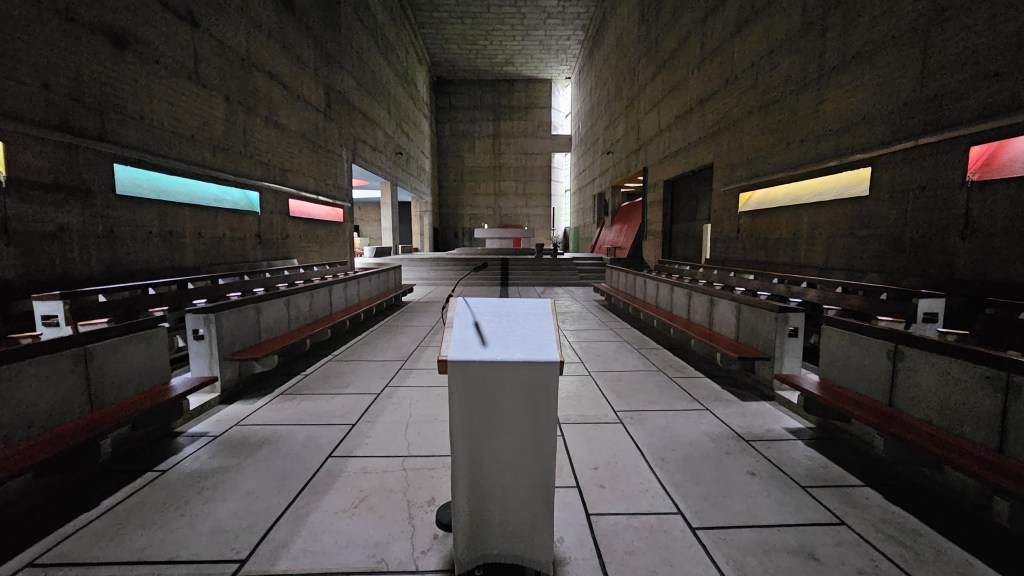
I might say that it was reaction to being back in a favourite building, a sense of being with an old friend. Or that I was simply pleased to be in France again and sitting in this quiet space gave me time to reflect on that. But I know there was more to it than that. The building itself was playing a part, supporting a mood. Maybe its austerity was triggering something, although it really isn’t as plain as first impressions might suggest.
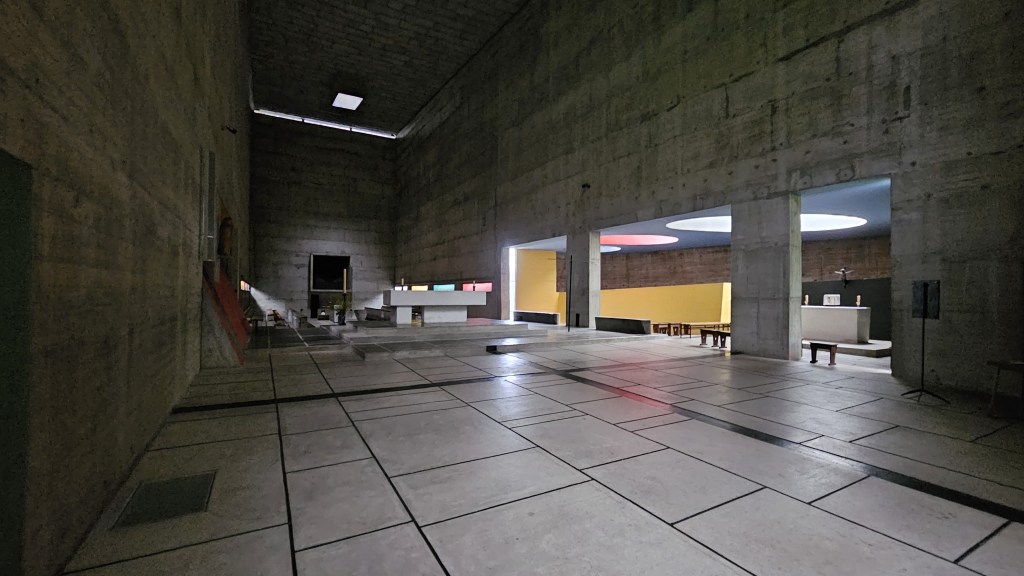
There are little details everywhere and splashes of colour, like the bulging, burnished red wall of the vestry, the coloured saucer domes that light the crypt, the changing levels of floor, the slivers of daylight seeping into unexpected corners, and even the submarine-like metal door into the church itself. These combine into something that makes me feel quietly delighted and, yes, moved. What a remarkable thing for a building to do.
A few days later I was in Le Havre, the Channel port whose centre was flattened during the Second World War. The rebuilding was planned by Auguste Perret, a master of concrete who had employed Le Corbusier right at the beginning of his career. Perret was an old man by the late 1940s and the new town he oversaw has a considered and thoughtful energy to it, with boulevards, parks and apartment buildings that have real elegance, thanks to their fine proportions. It was the church of St Joseph that I really wanted to see, though. It sits like a lighthouse close to the harbour but with the new town swirling around its base.

It looks solid and severe, more than a touch classical, like a wonder of the world, but that impression changes the moment you step inside. Suddenly you have entered a dramatic space, alive with colour and light, and dominated by the upward thrust of that main tower. The glass is the work of Marguerite Huré. It is simply breathtaking and you’re forced to sit to take it all in. If I believed in heaven then this would surely form the elevator shaft to its gates.

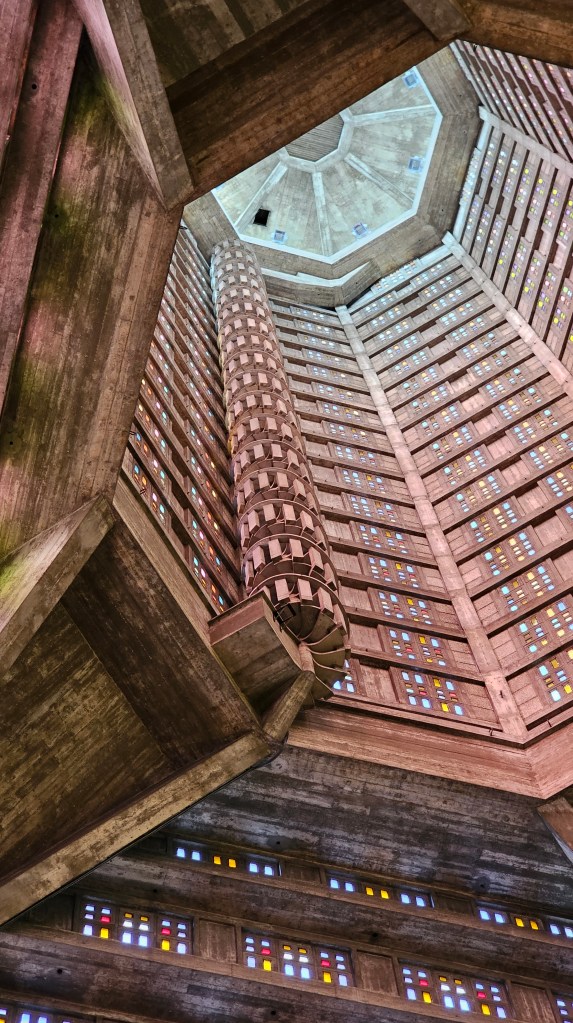
That sense of overwhelming scale is a common theme in religious buildings. It is about power, of course, and was usually meant to intimidate, being of a scale so different from anyone’s home. The great Gothic cathedrals are famous for their loftiness, the feat of achieving that height made even more astonishing given the fact that the building of so many started a thousand years ago. Add the buttresses and fine stonework of cathedrals like Rouen, Bourges and Wells in England and it’s hard not to be awed and even a little bit intimidated.
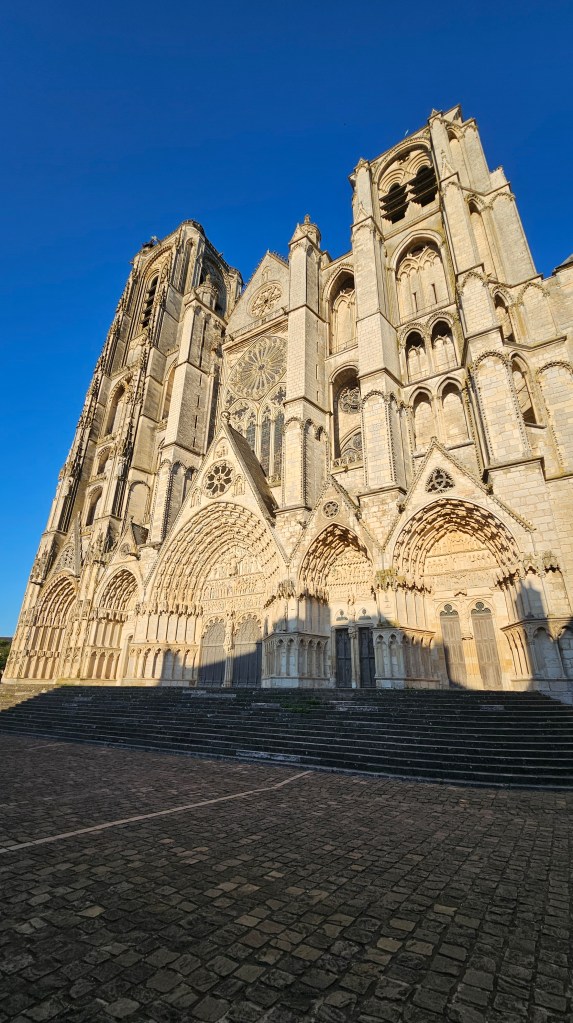
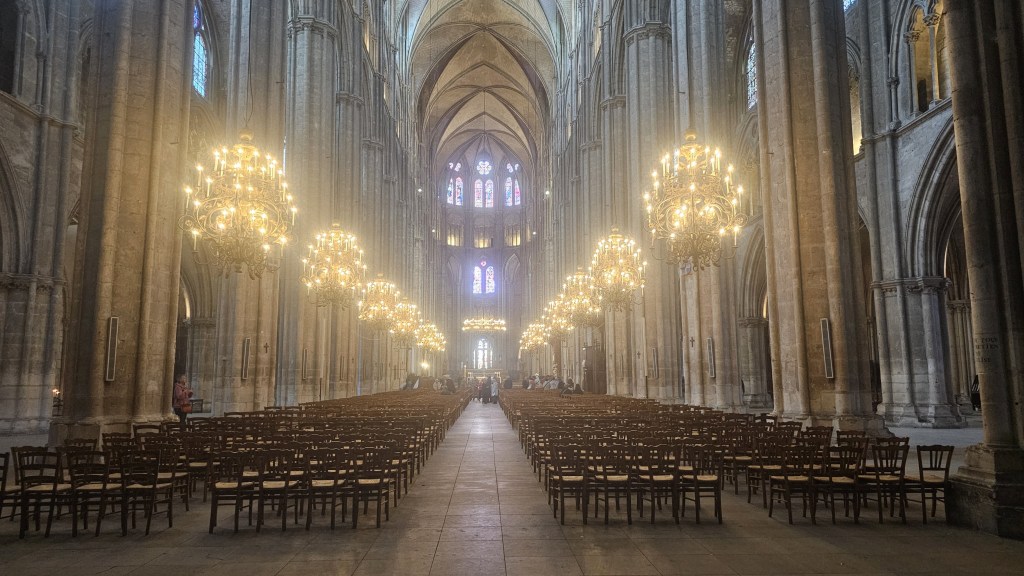
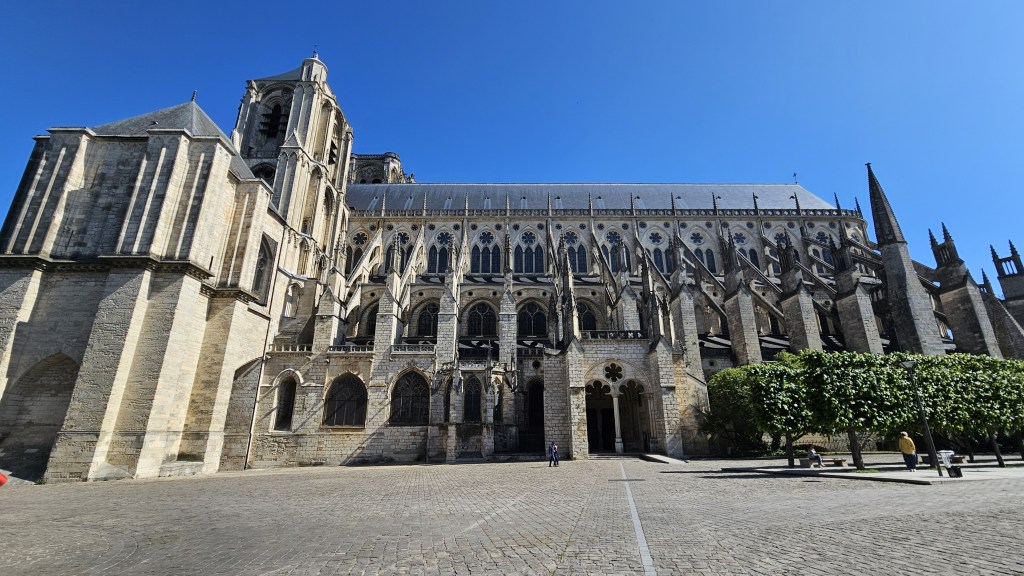
One evening in Bourges I sat for a while to gaze up at the evening light on the ornate west front of its cathedral. I fell into conversation with an older couple who lived in the town. They sat there often, they told me, marvelling at the spectacle of natural beauty merging with manmade beauty. We couldn’t help but smile as the stone glowed ever brighter. In an age of lightshows and lasers, there was something so wonderful about witnessing a sight that has impressed so many for so long.
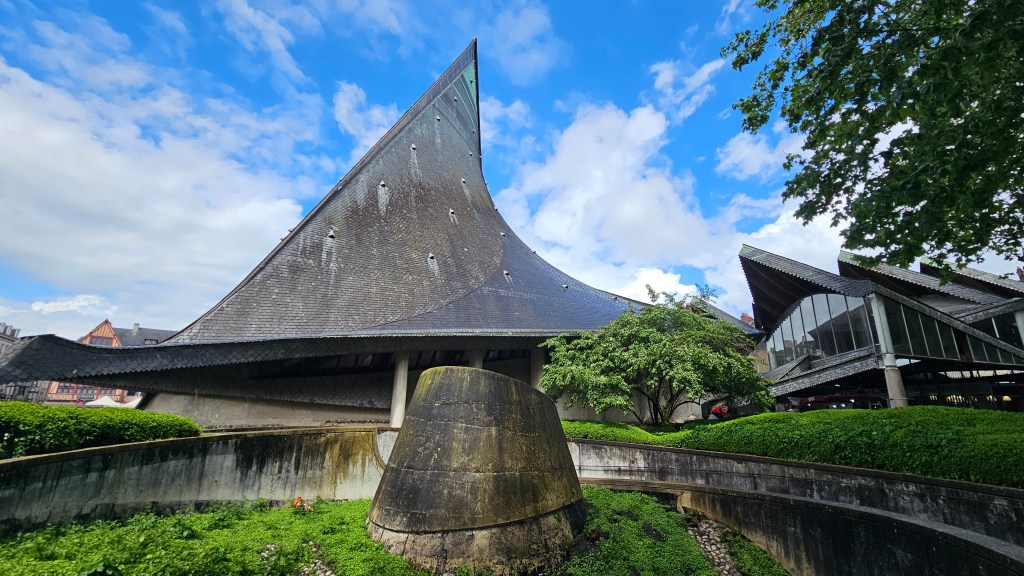
Scale in different things has much to do with provoking emotion. Not far from Rouen’s fabulous cathedral is a smaller church built in the 1970s on the marketplace site where Joan of Arc was burnt at the stake. The Ste Jeanne d’Arc church is a peculiar building because its swooping roof extends over the market, too. The walls are of concrete, mostly, but there’s one part of glass, which looks like nothing until you walk inside.

There, it floods the interior with light and colour, a symbol perhaps of the light that religion is supposed to spread, and a nod to the medieval glass windows of cathedrals like Chartres or Amiens, whose colour gives such life to the ribbed pillars and stone floors. Abundant light is rarely oppressive and so you’re left with a lightness of being. And maybe that helps one to be gentler and kinder.
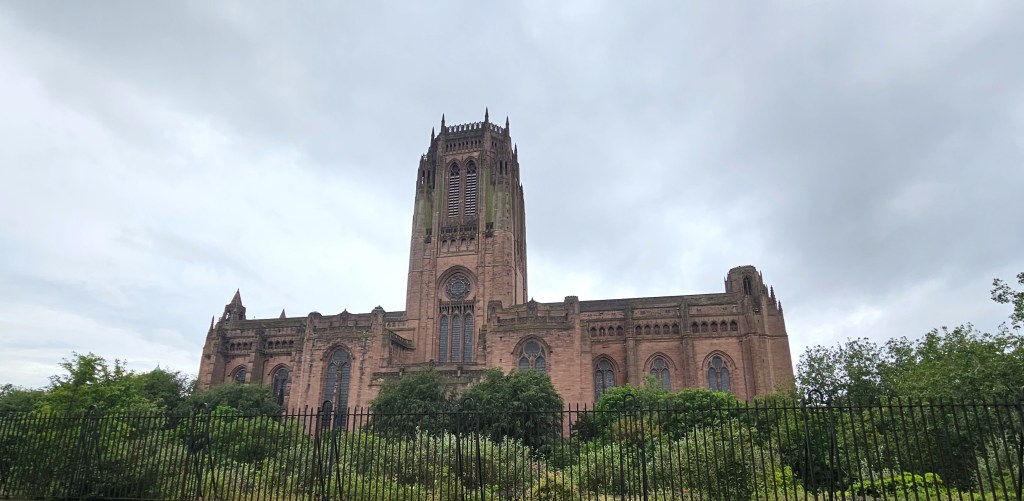
In Liverpool, there was an opportunity to experience two great cathedrals that are stylistically poles apart but which were completed within decades of each other. The Anglican cathedral was designed by Giles Gilbert Scott, the man who gave Britain its red telephone boxes and Battersea its power station. It’s an immense space, one of the biggest in the world, all liverish stone, and overwhelming in the way grand Edwardian buildings often are.
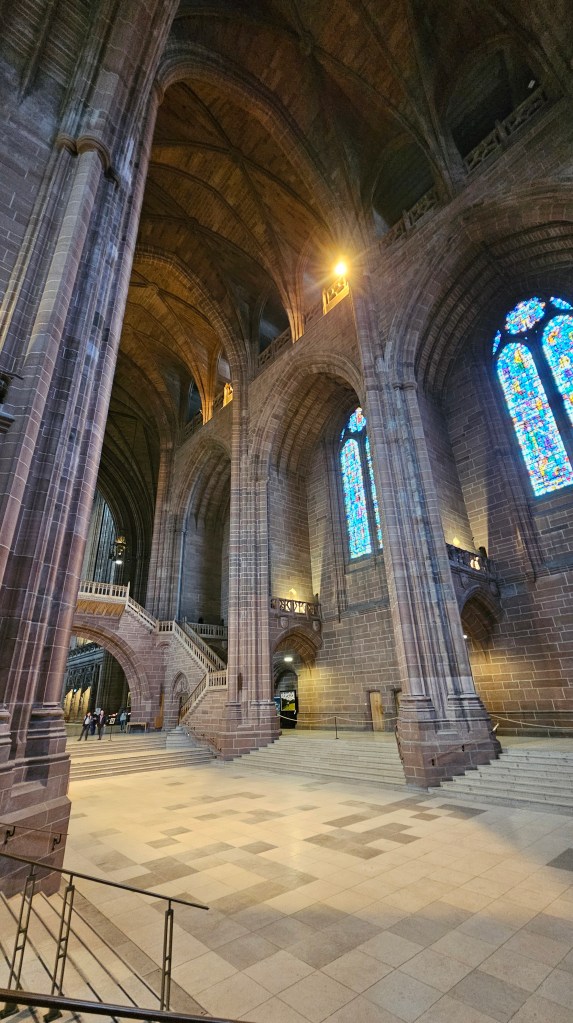
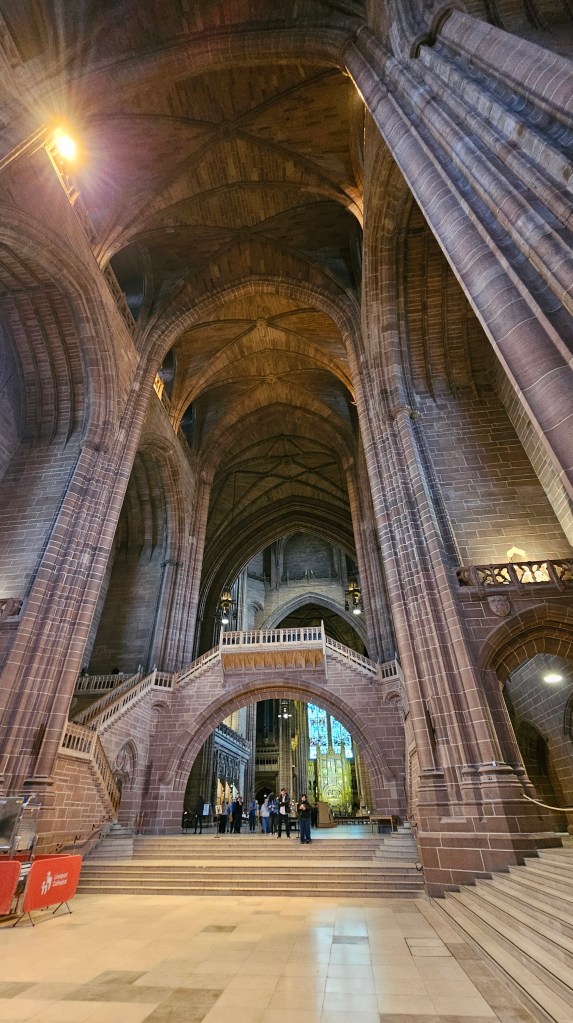
The space is dreamlike, like stepping into a painting. The scale is almost too much. You want to shout out in it. No wonder Paul McCartney debuted his Liverpool Oratorio there. I’m not sure it feels truly religious, though, especially with a side chapel serving as a bistro so that the clatter of cutlery spills out into the nave. I kept thinking it had the soul of an imposing railway station, like the wonderful Midland Hotel at St Pancras, which Gilbert Scott’s grandfather designed.
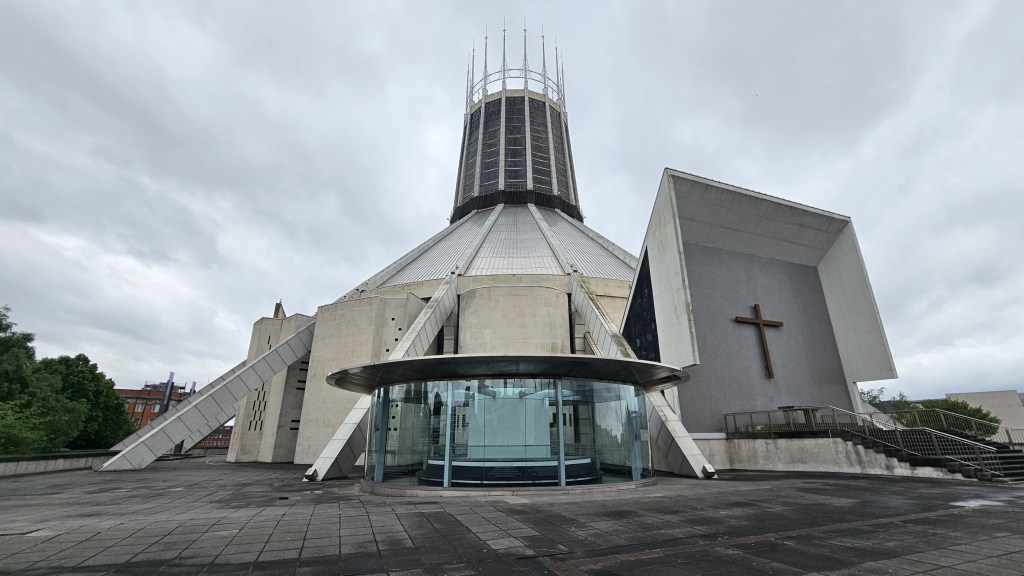
Nearby, almost as though they’re trying to outstare each other, sits the Roman Catholic Metropolitan cathedral. It was originally designed by that prime Edwardian, Edwin Lutyens, on a scale that would have dwarfed the Anglican cathedral, its dome the biggest in the world. But the cost of it meant that only part of its crypt was built (which remains).

Instead, in the 1960s, a much more modern design went up, designed by Frederick Gibberd, who was better known for designing Harlow New Town. It was quickly nicknamed Paddy’s Wigwam because of the city’s large Irish population and obviously the shape. That wigwam shape has a hint of the cathedral Oscar Niemeyer designed for Brasilia and others, like the Madonna delle Lacrime basilica in Syracuse in Sicily or Sydney’s Our Lady of Lebanon co-cathedral in Harris Park, buildings that put the altar in the centre. This was fashionable in the mid-century with new theatres and cultural centres also having the same, arena-like feel. Perret did it at Le Havre, too. The Metropolitan cathedral is a vast space, built to cope with a crowd, but I was struck also by the many chapels that ring that central space, thirteen in all. Each was different, some with traditional RC gaudy statues of saints, others quietly pared-back, creating spaces for reflection and prayer. I left Liverpool feeling impressed rather than moved by both these buildings.
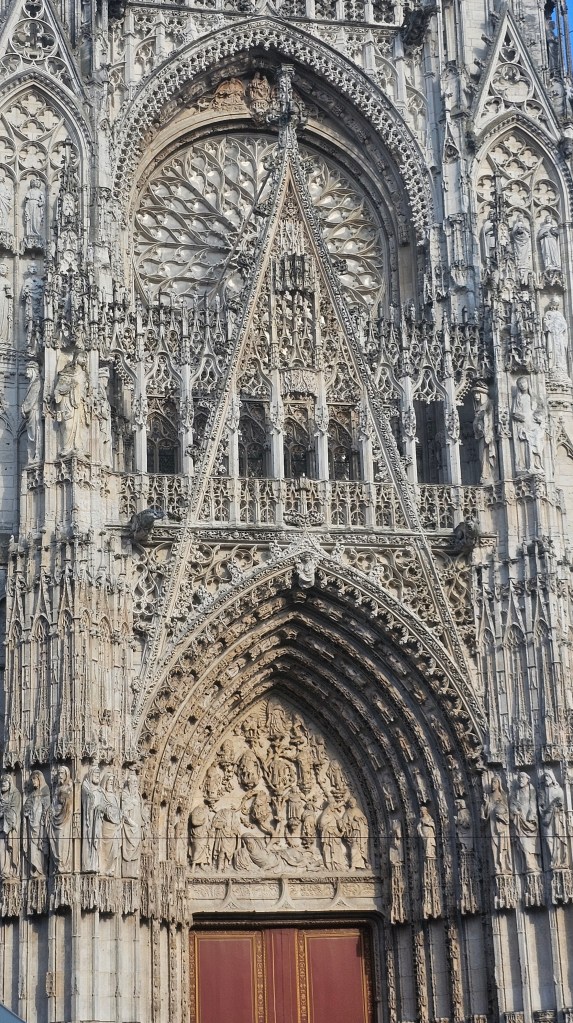
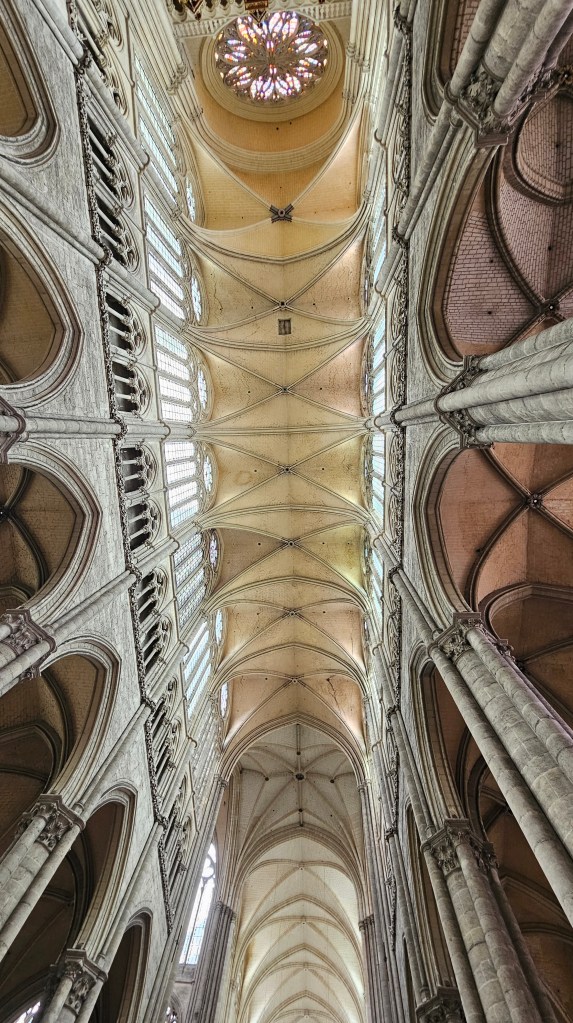
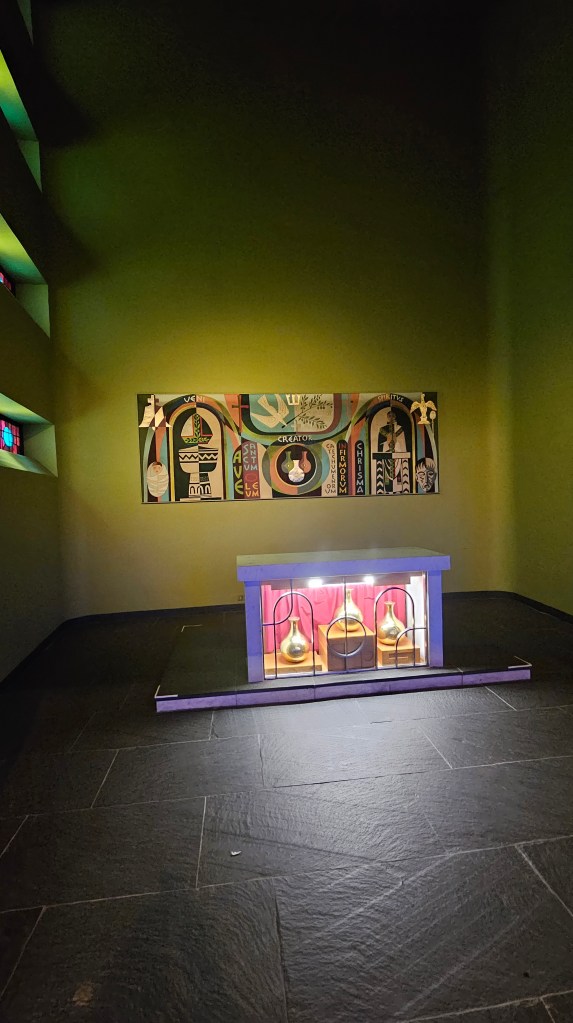
Is there a key to all these spaces that lifted my irreligious heart? Scale, obviously, has something to do with it, which is something we all marvel at, whether it’s a football stadium or a shopping centre. The difference is that each of these buildings is filled with the craft of others, whether the nameless stonemasons in Rouen and Bourges, or the neon scrawl of Tracey Emin in Liverpool’s Anglican cathedral (‘I felt you and I know you loved me.’) The art world would be poorer without the patronage of religion. Churches and cathedrals are wonderful art galleries, all of them.
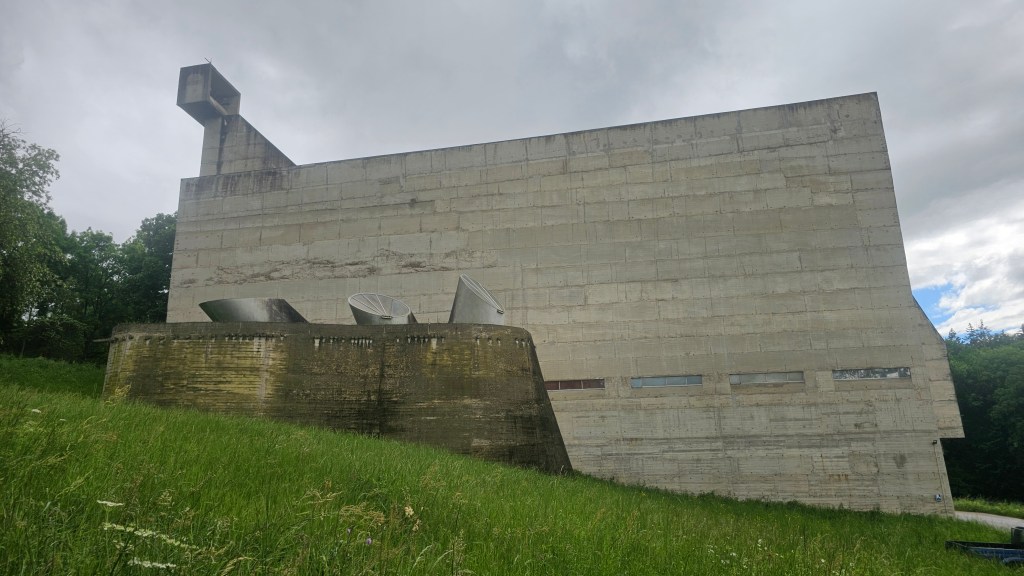
Some, like that ‘concrete box’ at La Tourette, seem to identify something else, something that might be glibly explained as less-is-more but which is, in fact, a total understanding of the building’s intention. At La Tourette, the brothers want to observe austerity and Le Corbusier created for them a dense and dark cave-like space in a building that sits in idyllic countryside. It’s like entering a quietened mind. And that’s what simple parish churches do, as well as Quaker meeting houses and Shinto temples. Which leaves the grandiose cathedrals to shriek their power, to dominate the landscape and remind everyone that the church always has its eye on you.
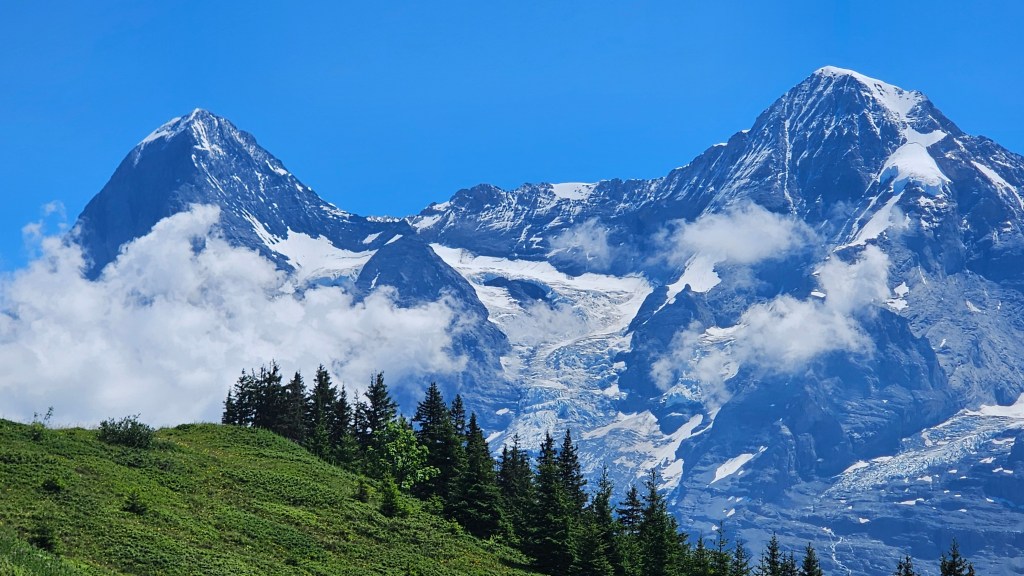
Our trip ended in Switzerland with days spent walking in the Alps. It’s a breathtaking landscape and time spent walking there is like meditating. This mighty nature moves the spirit, giving me the sense of being a small part of something much bigger.
I lean more towards Mother Earth than God so perhaps it’s not surprising that, after being excited, impressed and silenced by so many churches and cathedrals, in the end, I realised the power of nature tops them all. Le Corbusier said that history was the best teacher but I think he’s wrong. Nature is.



I think you’re right Colin. We are capable of creating such wonders but seem doomed to repeat history rather than learn from it. You’d think the only species that is born knowing its time is finite would do better. Perhaps the AI Gods will decide that on balance we are surplus to requirements and herald the dawn of a brave new world where Nature reigns supreme. In the meantime we seek solace in beauty where we can find it – fortunately it is all around those of us blessed to be free to seek it.
LikeLiked by 1 person
The spectre and reality of AI is indeed rather frightening. Thankfully there are still original creatives around and long may they prosper, despite the odds. Hard to beat nature but certainly those who take its lessons seem to create the loveliest work!
LikeLike
Thank you darling Colin for this. It’s so informative (for me), so touching, beautiful, even by your standards.
Love from both of us, Trish
>
LikeLike
Oh Trish, that’s so lovely of you. It’s an interesting subject, i think, which I’d like to explore more.
LikeLike
WordPress is determined to surprise me these days. Your post was offered to me as one of 3 that I might enjoy. Yours sounded like the best fit and I’m glad I stopped by. The only part of Switzerland I’ve seen is a long ago, but never forgotten, snippet of Lake Lugano. I have a yearning for the might of the Dolomites, but next month I hope will find me enraptured by Sicily. Nice to meet you, Colin.
LikeLiked by 1 person
Thanks for dropping by, Jo. We love Switzerland, always feeds the soul, and have very happy memories of Sicily – so many contrasts there, so much history. I look forward to dipping into your travels!
LikeLiked by 1 person