As we disembarked onto the concrete-grey tarmac of Nuuk’s airport, beauty wasn’t the first word that sprang to mind. Under a leaden sky and with a biting wind whipping my ears, it was more a question of why we were there at all. Greenland wasn’t green: it was definitely grey.

And yet it was the promise of flowers that had brought us here. We’d seen photos of villages of brightly-painted wooden houses with wildflowers swirling all about and thought it might be interesting to finish our European holiday with a trip to Greenland. A European holiday, I might add, that had been filled with the beauty of sumptuously scented English gardens and bee-filled meadows in the Bernese Oberland. The sort of beauty that springs to mind when you say the word. Greenland’s beauty might be harder to uncover.

Let’s get that bit of floral nonsense out of the way first. A little more homework would have revealed that those wildflower meadows we’d seen in photos are in the south of Greenland, where Norse explorer, Erik the Red, explored in the 980s, and which he dubbed Greenland as a way of enticing Icelanders to settle there. Our voyage was farther north, starting in the capital, Nuuk, and then heading as far up as the unfrozen sea would allow. That’s not to say that we didn’t see flowers but they became increasingly sparse the further north we went, tucked in crevices as windchill temperatures plummeted. In Uummannaq I asked a guide about a groundcover that had attractive silvery leaves and was told that it was a birch tree. Forget bonsai, Greenland does trees at a micro level.
It was now apparent that we weren’t there for the flowers. Trump had also taken office since we booked and was talking about taking over Greenland so there was a worry we might get caught up in some kind of international incident.

As I write this, he’s still chuntering on about it, in the reckless way that no longer astonishes us. It feels like we’ve become a whole lot more familiar with Greenland now, too.

Nuuk is a small city of 20,000, home to the University of the Arctic. Like everywhere in Greenland, its staple industry is fishing: halibut, char, cod, and shrimps. Alongside older timber buildings are high-rise housing estates, some with a Soviet concrete quality, but there’s a shopping mall and even, we were proudly told, three sets of traffic lights. (Although no roads connect the settlements in Greenland, there are still cars in the larger places.) On a five degree day, under the grey sky, it felt an uninspiring place. Strange, then, how differently I would view it when we returned a fortnight later. Greenland, I was to learn, is a quietly seductive country.

Our trip was based in a smallish ship with about 300 other passengers. We’d travelled with Hurtigruten to Antarctica in 2019 and loved the Roald Amundsen. This time we were in her twin sister, the Fridtjof Nansen, with its same ability to run on battery power for short periods. Everything that impressed us about the Amundsen was present on the Nansen – the pared-back Scandi style, the ban on single-use plastics, the locally sourced food that puts money into local communities. No disco, no casino, no dressing up. It’s like staying in a mountain lodge, where a day in the bracing outdoors ends by curling up with a book and a glass of wine in a comfy chair.

Our first call was to the World Heritage Site of Illulissat, a fishing town famous for its fjord that is choked with icebergs. The most famous of these floated towards Canada in 1912 and holed the RMS Titanic.
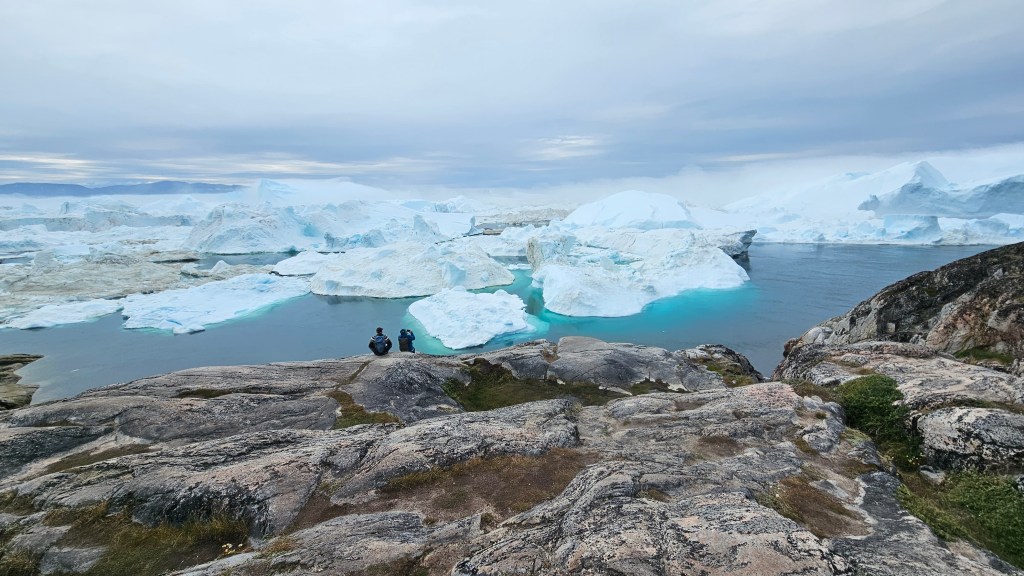
The fjord is spectacular, with layers of jagged icebergs, some displaying the dense blue of ice that has been compressed so much there are no air bubbles trapped inside. Majestic though the fjord looked, the icebergs are much smaller than they were even twenty years ago, as climate change affects sea temperatures. This was an issue we came across time and again.


The town’s harbour was busy with fishing boats but the air was filled with the sound of barking dogs. These are the sled dogs, a vital part of Greenlandic life. Every settlement we visited had dogs. They languish in the summer months with little to occupy them while their pups roam free. They’re more wolf than husky and we were warned not to get too close but they’re handsome beasts. In the long winter months they work tirelessly, pulling sleds across the sea ice, sometimes hauling large motorboats to the open sea many hours away from the settlement. Norwegian explorer Roald Amundsen understood the value of these robust dogs and used them in his successful trek to the South Pole in 1912, while Scott floundered with his reliance on horses at first and then manually pulling the sleds.

You fall into a rhythm on these kinds of trips. There are lectures on wildlife, geology and history, that leave you with facts such as the longest word in Greenlandic having 97 characters. The latest wave of Inuit people arrived through the Canadian Arctic in the twelfth century, we were told, bringing new skills, although there have been different sets of Inuit living in Greenland for nearly five thousand years. No one uses the word Eskimo, and igloos are only used as temporary shelters when hunting on the ice.

Among the international team of experts were three locals, each of them eager to share their own stories of growing up in remote settlements. One was Aleq Peary, a young man with piercing blue eyes. He’d been the subject of the National Geographic film, The Last Ice, and came from a family of hunters from the far north. I found his descriptions of life growing up in this most remote area utterly mesmerising, the way he brought to life stories of making a kayak or hunting for narwhals with his soft and rhythmic way of talking.

The weather brightened as we travelled. We missed the heart-shaped mountain behind Uummannaq due to low cloud but by the time we were in the far north, the air was crisp and clear, the sunlight dazzling around the clock. One night I stayed on deck until midnight just so I could take a selfie with the ship’s clock behind me, the sunlight as bright as day. The air was cold and pure. The sea was filled with icebergs, some like frozen castles. Bare rock hillsides rose up behind curving bays.
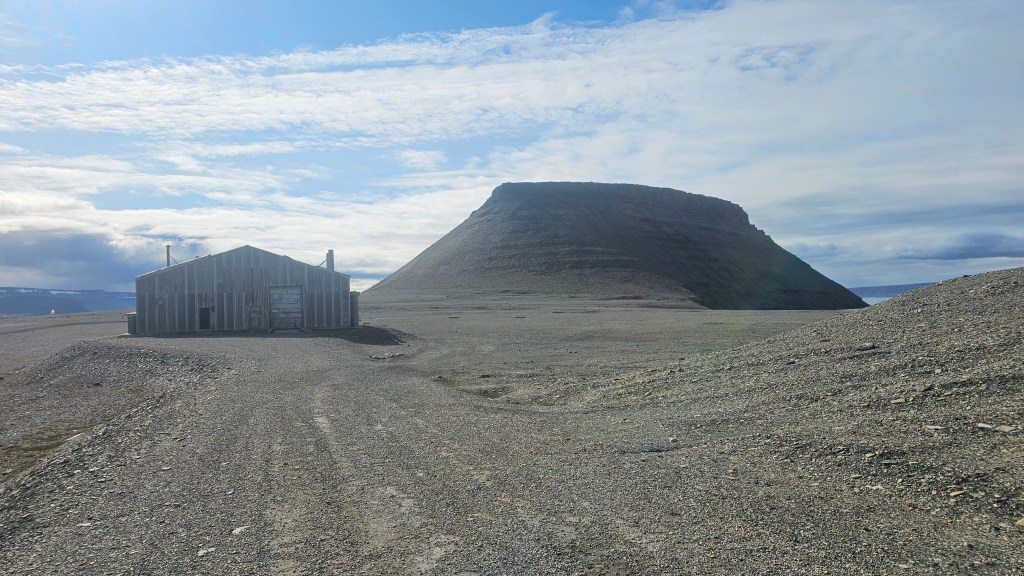
We visited several settlements in the northernmost Thule region, including Dundas, which had been abandoned when the Americans established the Thule airbase next to it in WW2, now called the Pituffik Space Base. I could see there was work going on there but we were forbidden not only to photograph it but to even look at it. I was reminded of visiting Svalbard a few years ago and passing a mining town that was wholly Russian-run. These outposts of other countries quietly doing who-knows-what, out of sight, out of mind, have a sinister quality but I have a horrible feeling that the Pituffik military base will become better known in the coming months.


A visit to the remote community of Savissivik was revealing because it is hardly visited by anyone, let alone a small ship full of tourists. The few residents were shy and obviously perplexed by our interest. Polar bear skins flapped in the breeze, hunks of gelatinous blubber lay on the ground for the sled dogs, and the houses were patched together with whatever material was to hand. A young hunter, with his little brother, guided us around a nearby lake, the source of the community’s fresh water, and we squelched over boggy ground with shards of white quartz piercing the moss like broken teeth. It felt forlorn and you couldn’t help wondering how they survived. And then marvel that they did.

Further on, in the region’s main town, Qaanaaq, and nearby Siorapaluk, the communities felt more prosperous. The people were very welcoming, often dressed in traditional clothing (polar bear trousers, carved bone amulets, sealskin boots) and their settlements were well cared for.

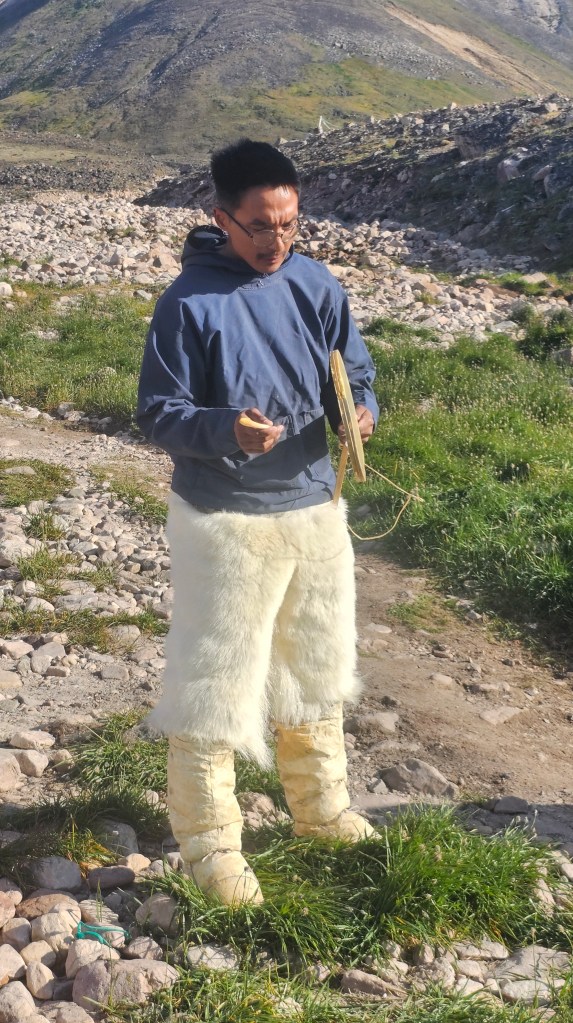
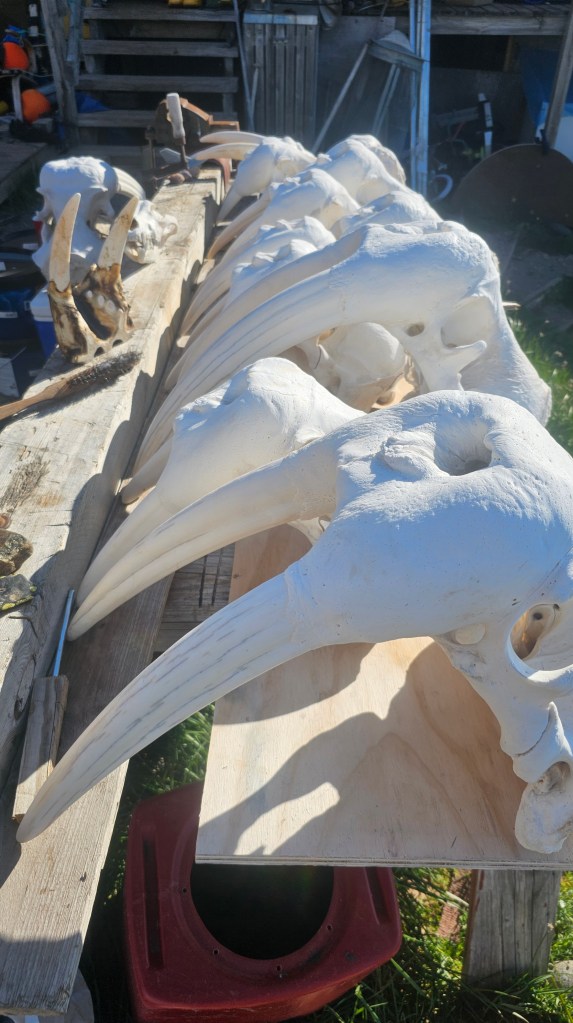
In Siorapaluk, especially, we felt as though we had stumbled across some kind of Arctic paradise, the tiny community seeming so proud to share their lives there. A young man called Umaaq sang us traditional songs and cried when he talked about the death of his father. Elsewhere a hunter had set out walrus skulls for us to admire (there were fresh heads lined up in other places, somewhat confronting to those of us brought up on The Walrus and the Carpenter.)
I asked a knotty middle-aged man about the polar bear skull he held in his hands and he told me that he had shot it almost where I stood. Every community is allowed to kill a certain number of polar bears each year. Here, it was about forty. They use every part of every animal they kill, just as they always have. He was a friendly bloke, happy to chat in his very broken English (which is astonishing, given our remoteness, until you realise the Danish education system in Greenland is rigorous). I asked him if the strips of dark meat hanging from the front of his house were from seals and he shook his head. ‘Narwhal.’ I had hoped to see narwhals in the sea, the unicorn-like whale with its immense tusk, which is really an elongated canine tooth. I’d noticed the tusks used as talismen hanging on house walls. Now I watched, with fascination and some horror, as the man reached up and tore off a tiny piece of the drying meat and then proffered it. I couldn’t say no. It was a little like beef jerky, quite tasty. The first and last time I have eaten whale, I hope.
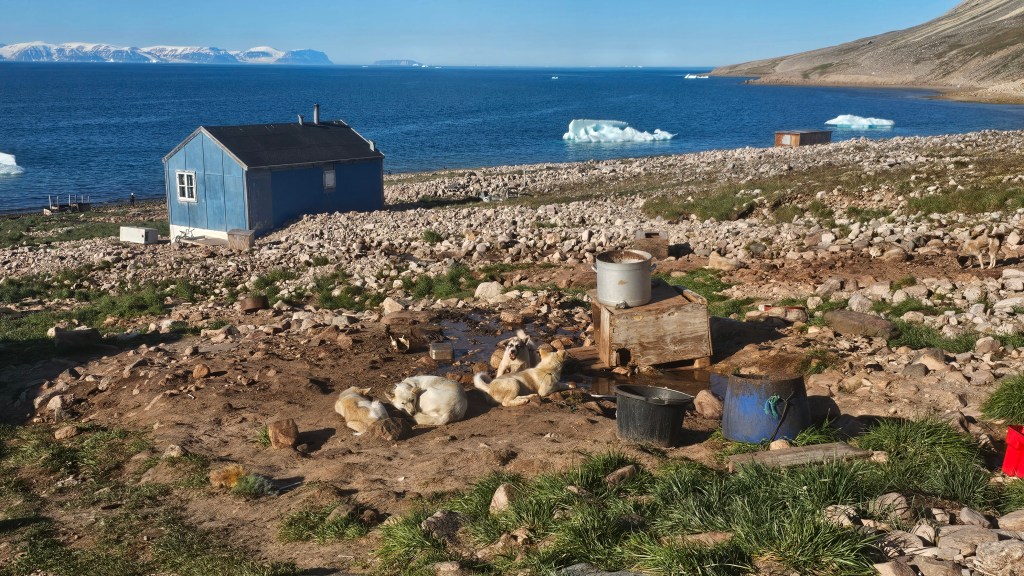
We lingered on the sunlit beach at Siorapaluk, charmed by the infectious friendliness of its inhabitants. This was as far north as we could go, the sea frozen beyond. Canada was within sight: we were at the top of the world. And yet sixty people live here permanently, although that number swells with hunters when migrating walruses pass in great numbers. Nature’s larder.

Someone remarked that they hunt everything in Greenland but I wondered about the lack of vegetables. Roald Amundsen learned that eating fresh raw meat gives you vitamins, including Vitamin C. His Antarctic group didn’t get scurvy because they ate the abundant penguins there but Scott, a more sentimental Englishman, didn’t and it’s likely his team was weakened by scurvy before the terrible weather finished them off.
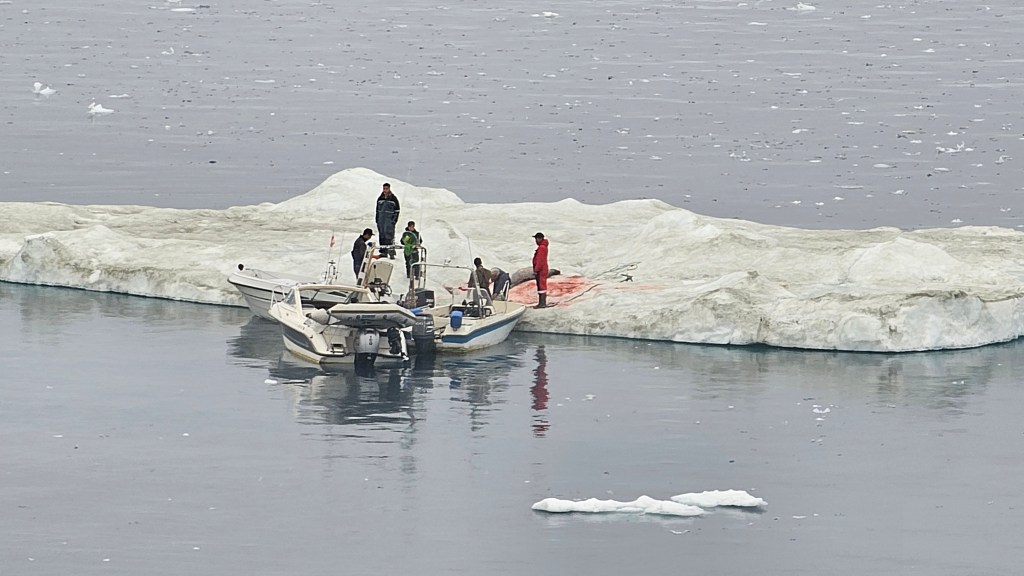
Visiting these remote communities showed life being lived in much the same way as it had for centuries. I was always aware of a strong sense of identity and pride. This wasn’t an indigenous culture that had been totally quashed by colonisers, leaving people feeling dispossessed and forgotten as has happened elsewhere, although there are elements of it if you delve deeper. It was interesting to hear how Erik the Red’s settlers from Iceland had lasted only a few centuries before dying out, the lack of trees meaning their boats couldn’t be repaired or new ones built, the plunging temperatures of the Little Ice Age devastating food sources. Arrogantly, it seems, they didn’t look to the Inuit to learn how to survive but simply allowed themselves to die out.
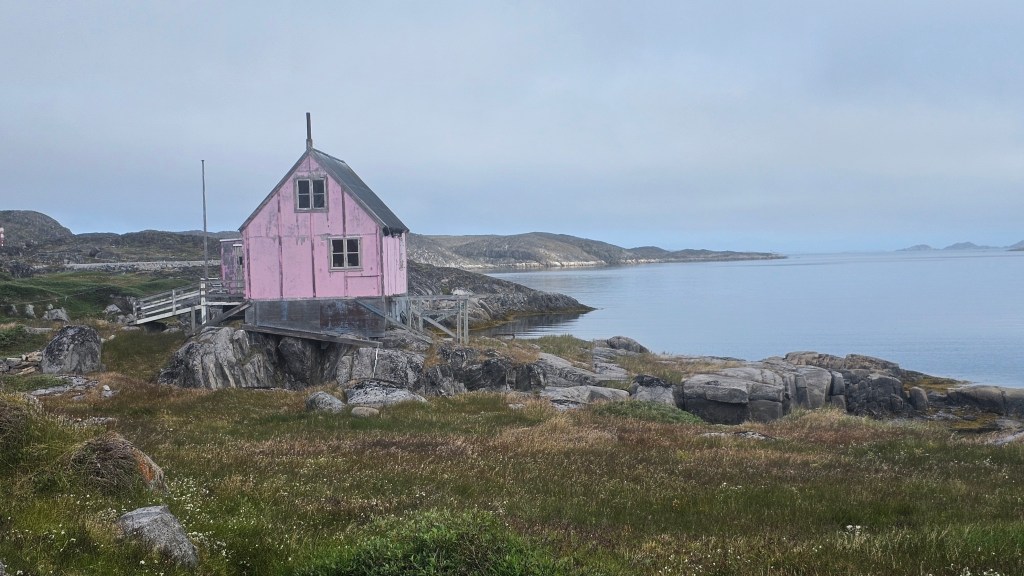
The Inuit in Greenland, especially in the harsh extremes of the north, know how to survive and don’t need outsiders to tell them how to do it. But the lure of the wider world draws young generations away, and the changing climate brings uncertainty, shifting the ocean harvests that once were plentiful. An example was seeing vast flocks of Little Auks, a puffin-like bird. This pretty black-and-white seabird eats mainly plankton-like crustaceans called copepods. The warming sea has made the copepods retreat further north. Where once Little Auks were prolific around Iceland now there are none. In time, the copepods will die out altogether, and the Little Auk populations of the Arctic will also become extinct. Drill, baby, drill, as Trump says, not seeming to realise that extinctions like this might herald our own.
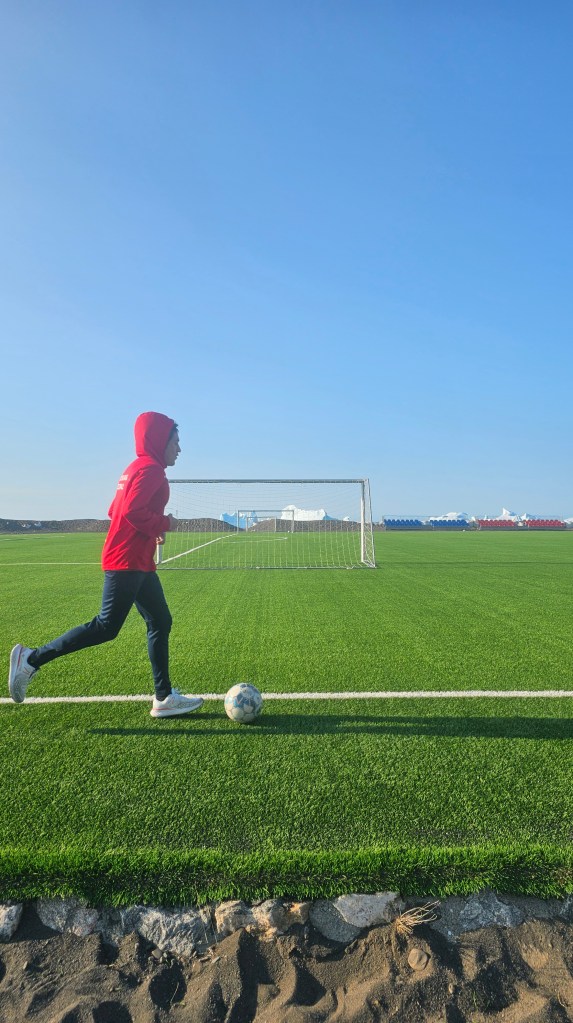
We returned slowly to Nuuk, stopping at other communities that each offered insights and beauty in their own way. A polar bear was glimpsed with her cubs, Fin whales passed nearby, and we enjoyed the Instagram-friendly football field backed by icebergs at Qequertarsuaq. After the tiny communities we had seen, Nuuk felt like a large and busy city, almost overpowering.
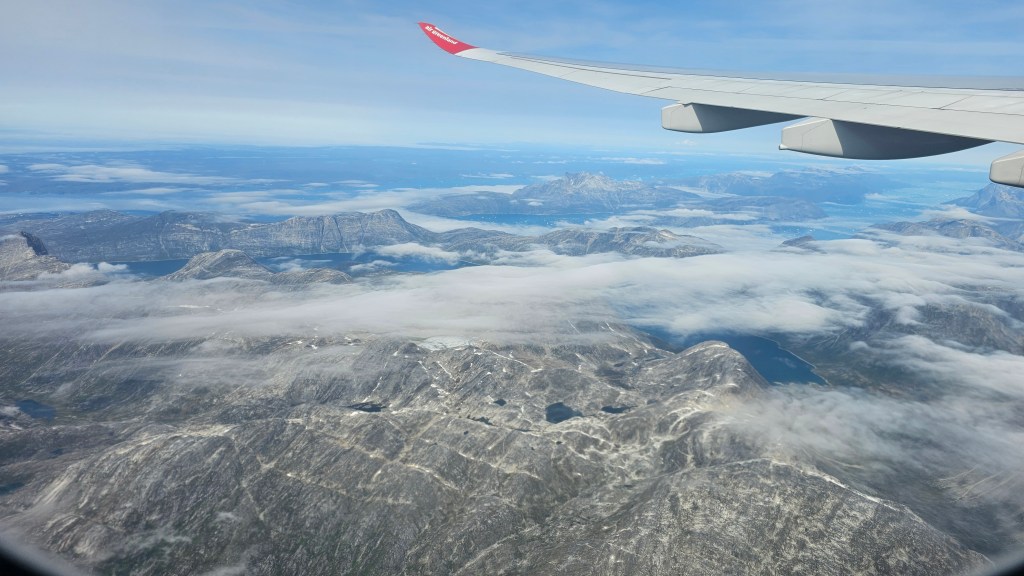
When Air Greenland’s bright red Airbus lifted off to deliver us back to Denmark, I gazed down on the huge fjord system that reaches around the city and beyond, before the dense icecap, several kilometres thick, rendered everything white.

What a remarkable country, filled with the rugged beauty of both place and people. I’d been offered a glimpse of a precious world, of everyday survival, of nature’s wildest elements. Seems I didn’t need flowers, after all.

 Colin Bisset
Dear Colin, thank you so much for sharing this incredibly interesting and informative account of a part of the world few of us will visit. I really enjoyed reading it, together with the pictures you provided, and which brought your words to life. Yours, Avenel Mitchell.
LikeLike
Thank you so much, Avenel. It really is a remarkable island and, as you say, not on everyone’s bucket list. I’m always intrigued to see a completely different way of life, and that is getting rarer as the world becomes so homogenised. So glad you enjoyed the trip1
LikeLike
You didn’t need the flowers but you certainly deserve them! So glad you decided to share this fascinating journey here. Of course I followed some of it via your photos on Instagram but reading all about it here feels almost like being there. An amazing trip, and you certainly had a good sense of timing! We had thought about visiting Greenland out of solidarity but now it’s beginning to feel too scary. Here’s hoping they are able to retain their sovereignty and their traditional way of life.
LikeLike
So awful to watch the Greenland story evolve on Trump’s watch. As usual, it’s all about greed. I really fear for the Greenlandic people and yet hope, as they have with the Danes, they retain their incredible resilience and traditions, regardless. That apart, I think you’d really enjoy a visit there!
LikeLiked by 1 person
Dear Colin, Thoroughly enjoyed this fascinating account of your Arctic adventures, thank you. A country th
LikeLike
Thank you! I watch with trepidation what will happen now, and really feel for the Greenlandic people having to endure such uncertainty.
LikeLike