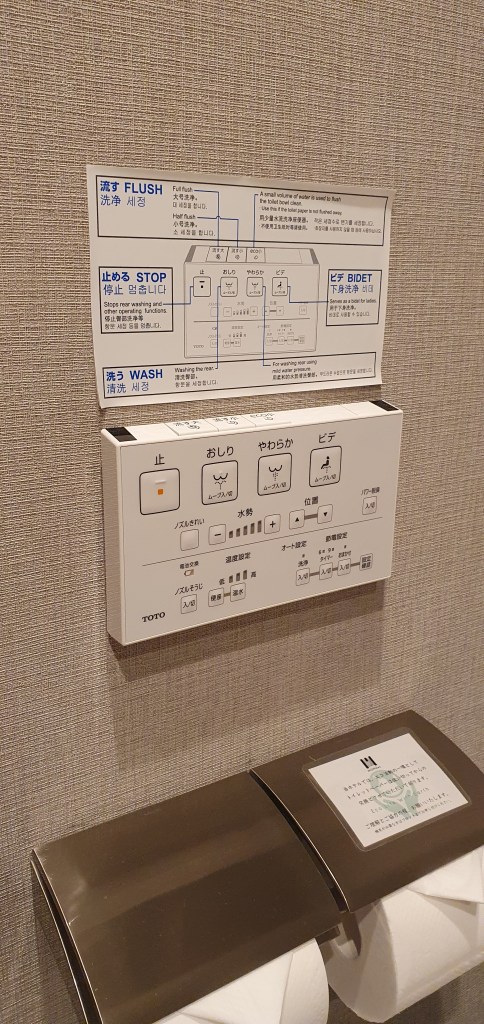
Japan is good for me. It has sublime architecture and breathtaking landscapes, it’s incredibly well-organised and it’s just a little bit bonkers. I can’t think of a single negative experience I’ve had there, and whether I’m in the heart of a city or walking in the mountains, there’s always something that fills my heart or makes me smile. And that includes cutesy cars trying to look like Range Rovers, scatter cushions left on public benches, and the occasional public loo filled with the sound of a babbling brook and tweeting birds. (And of course, while we’re on the subject, being goosed by a Japanese toilet every morning – it never fails to raise your eyebrows, let alone your spirits.)
This was our third trip there and our timing was perfect. Jetstar was about to stop direct flights to Tokyo from Gold Coast (now they go from Brisbane) and the cost of the Japan Rail Pass was about to rise by seventy per cent. You order the pass before you go and pick it up when you arrive (hint: there’s always a long queue at the JR agency at Narita airport so consider collecting it the next day at a station). The pass means you can use most JR trains as well as various buses and trams in some cities, and it’s exceptional value if you plan to travel a lot. Which is why we added the northern island of Hokkaido to our itinerary.
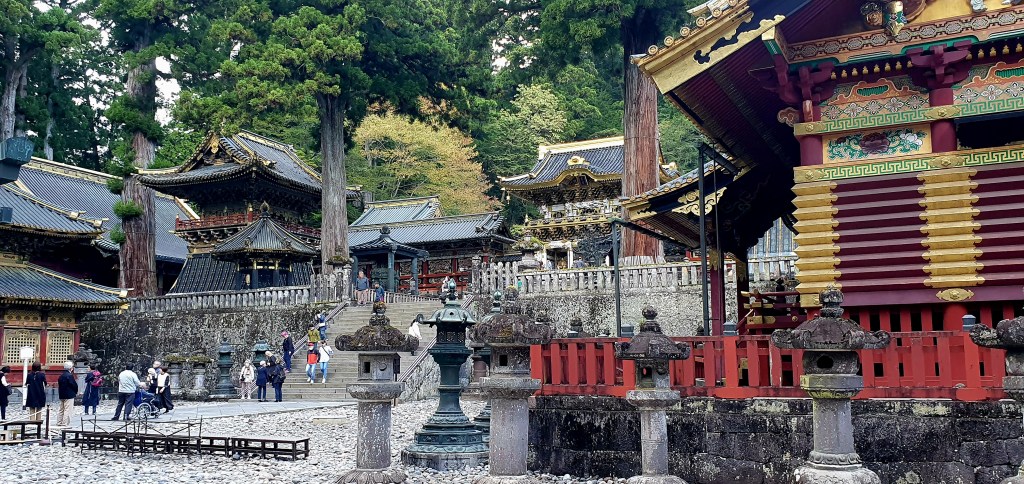
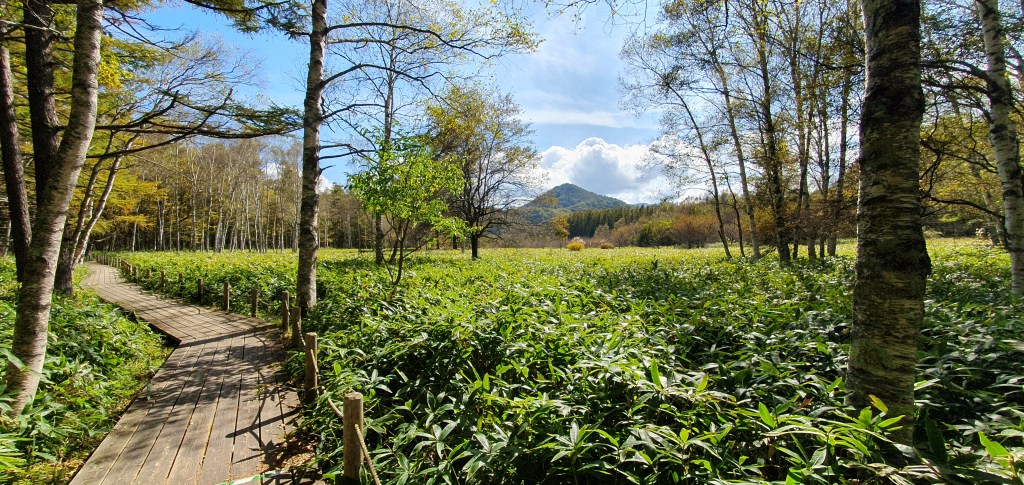
Mid-October was a tad early for full autumn colour but there was enough to keep us happy. We started with Nikko, exploring its various temples, including the very ornate Toshogu shrine, all gleaming gold. I loved the cool avenues of cedar trees. We picked our way around the temples again in the evening, wrapped in our yukatas and feeling rather theatrical. The next day we ventured higher, beyond Lake Chuzenji, which 20th century bureaucrats enjoyed as summer respite from Tokyo’s heat, and winding upwards to tiny Yumoto Onsen, famous for its sulphurous hot springs (the lake steams in the cold morning air). Numerous walking trails start there, along steep tracks or boardwalks and all through beautiful forests or across heathland, and with stunning views to the surrounding mountains.
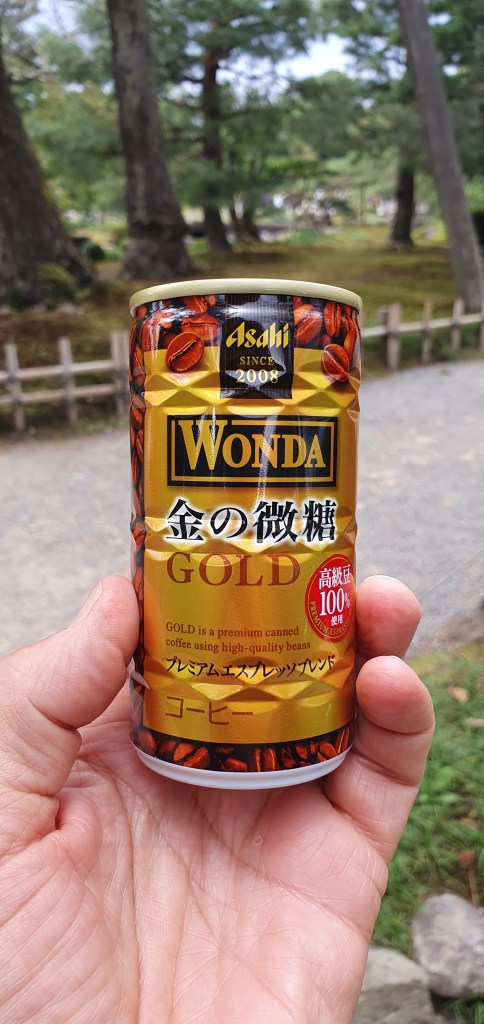
Most people hang a bell on their daypack to warn bears of their presence but I made do with a pebble inside an empty can of coffee (I’m a coffee snob in Australia but in Japan I love a shot of caffeine from cans of coffee bought from vending machines).
We didn’t see bears but we did find ourselves in a forest glade surrounded by a large group of macaque monkeys so I was relieved that they moved off when I rattled my little can, some of them screaming back at us like a bunch of schoolboys trying to save face.
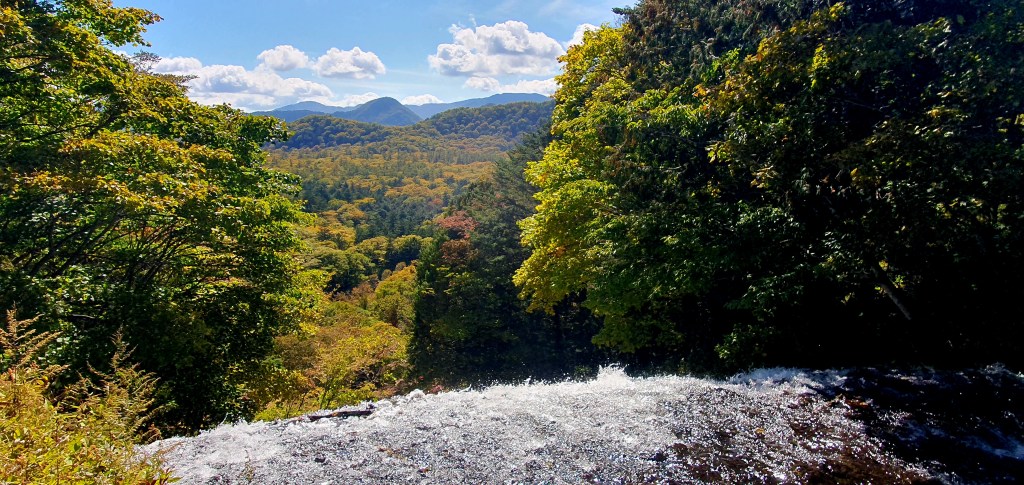
There was heavy rain the day we left Yumoto. It was a short walk to the bus but the hotel owner insisted on giving us both an umbrella, saying they’d been left by guests even though it was obvious they were new and unused. It’s the sort of consideration you come across all the time in Japan and a mark of the old fashioned hospitality and delicious food we enjoyed in that particular hotel (the Yumoto Itaya).
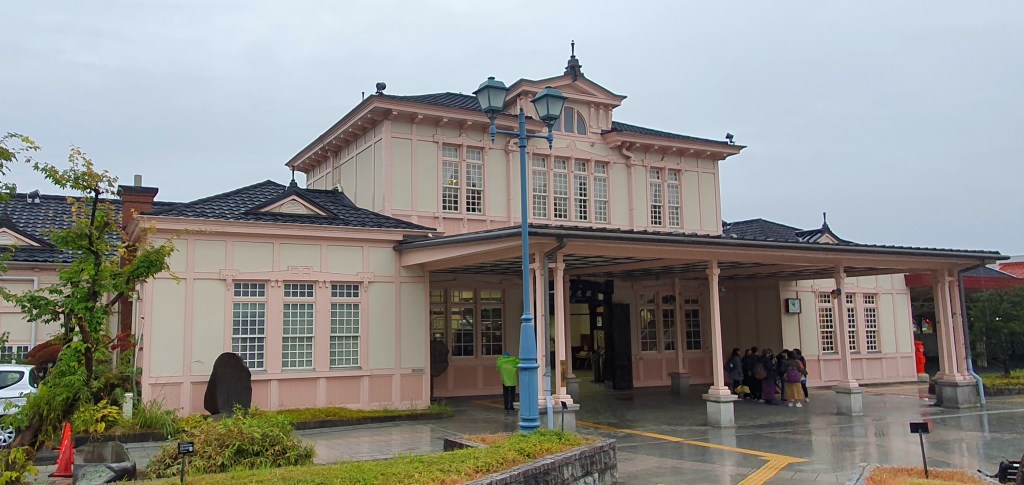
The bus dropped us at Nikko station, which was supposedly designed by Frank Lloyd Wright but definitely wasn’t, although he visited Nikko in the 1900s and liked it immensely. And then it’s an hour-long journey in a little train, trundling through a landscape of rice paddies and stone barns that looked more Tuscan than Japanese, to the mainline station at Utsunomiya. It was lovely to board the Hayabusa shinkansen and be whooshed to Hakodate in the north. The bullet trains are always a thrill, with loads of legroom and hardly a wobble as you hurtle along at 300 kph. It’s sobering to pass Fukushima and Sendai and remember how they looked as the tsunami struck.
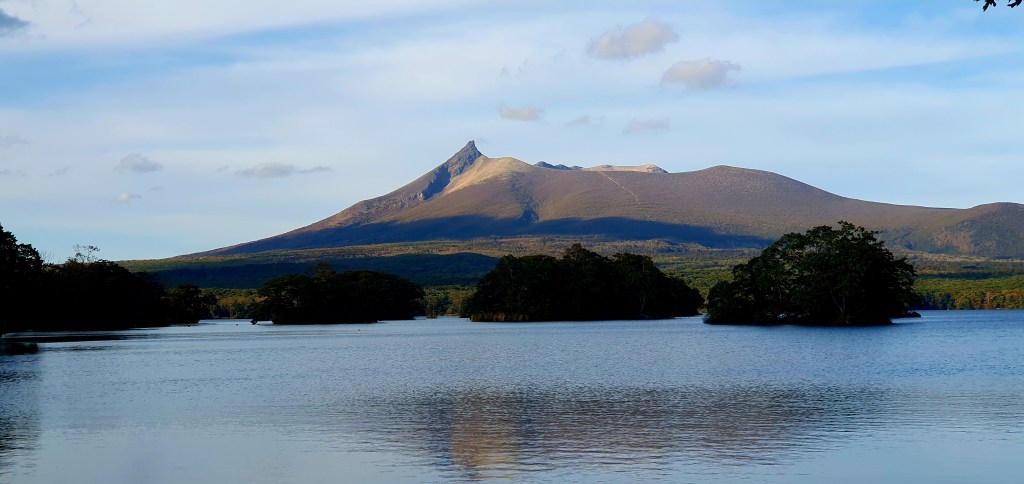
The island of Hokkaido feels very different from the rest of Japan. It’s remote, for a start, with wild mountains and lush farmland. After whizzing through one of the world’s longest tunnels, beneath the Tsugaru Strait, the shinkansen surfaces and stops outside Hakodate and from thereon it’s all slow trains.
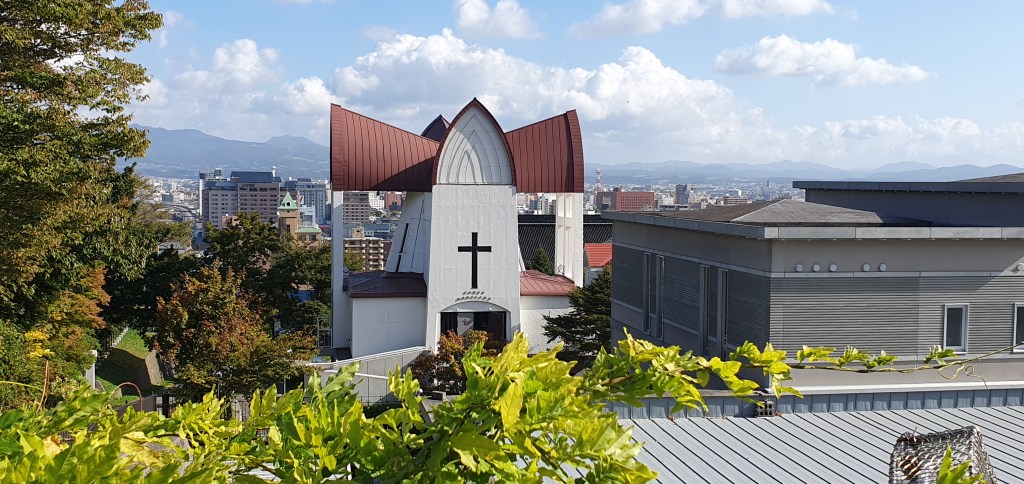
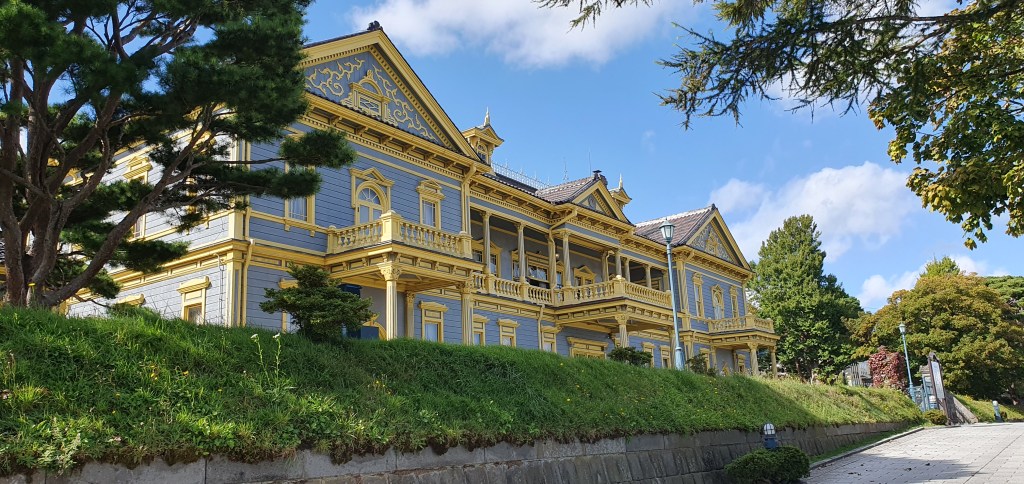
Hakodate was a lovely surprise, one of the first Japanese ports to open up to the world in 1859, and there’s a great collection of buildings, including churches and consulates, in the hillside suburb of Motomachi overlooking the port.
Sapporo, the capital of the island, is a three hour train ride away and felt rather anonymous, with large office buildings lining the grid of streets in the centre.
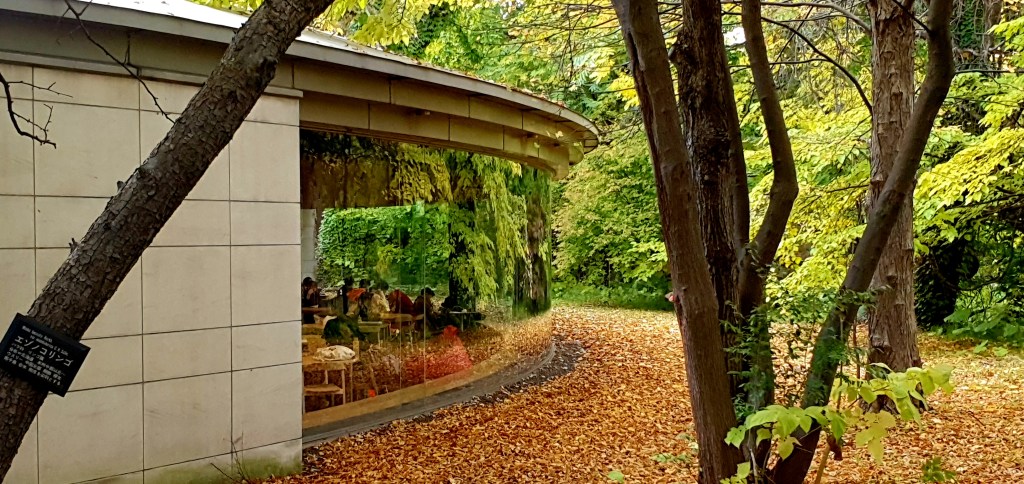
There were highlights, though, like the leafy campus of Hokkaido University in the centre which felt like an American Ivy-League university, and the Moerenuma Park on the outskirts, which was designed by Japanese-American designer Isamu Noguchi. It’s full of interesting structures, including manmade hills which are popular with tobogganists in Sapporo’s snowy winters.

The cold waters surrounding Hokkaido also provide it with abundant seafood. We had a remarkable meal in Sapporo at the Michelin-starred Hanakoji Sawada, where Chef Sawada took time to explain precisely where each ingredient was sourced, and even gave us a perfect potato slathered in butter, showing how Hokkaido’s volcanic soil makes it the dairy farm of Japan. Even a fairly basic meal in a seafood restaurant in Hakodate was memorable for its quality, with various types of crab taking the starring role. Four nights in Hokkaido was enough to scratch the surface but if there’s a next time then we’d hire a car to explore the more isolated areas.
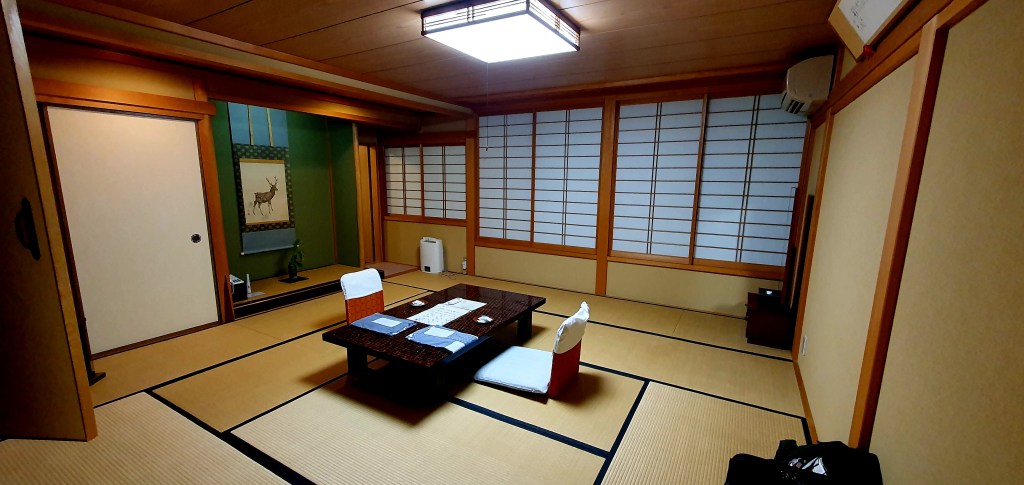
I was happy to move on, especially as we were heading for Kanazawa, a city that is becoming better known with tourists and is often compared to Kyoto but without the crowds. It’s certainly dripping in history and has at its centre one of Japan’s great gardens, Kenroku-en, which is snipped and prodded to perfection. It felt odd to ascend a hill and find a lake.
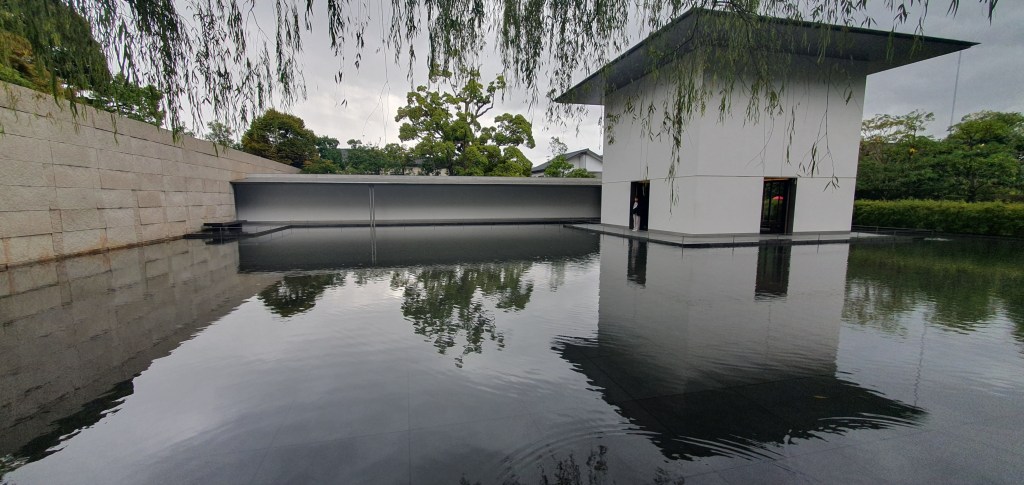
More to my taste was the stunning D.T. Suzuki museum, dedicated to the life of the writer and philosopher who did much to promote Zen Buddhism to the West. The pared-back building reminded me of Mies van der Rohe’s pavilion in Barcelona and was beautifully set, surrounded by a large reflecting pool. I found myself blinking back tears as I walked around it. ‘I think this is the most perfect building I’ve ever been in,’ I said to Anthony. It was interesting to visit the Museum of Architecture the next day, designed by the same architect, Yoshio Taniguchi, and holding work by him and his father, Yoshiro Taniguchi, and to see the magic of similar elements at play again.
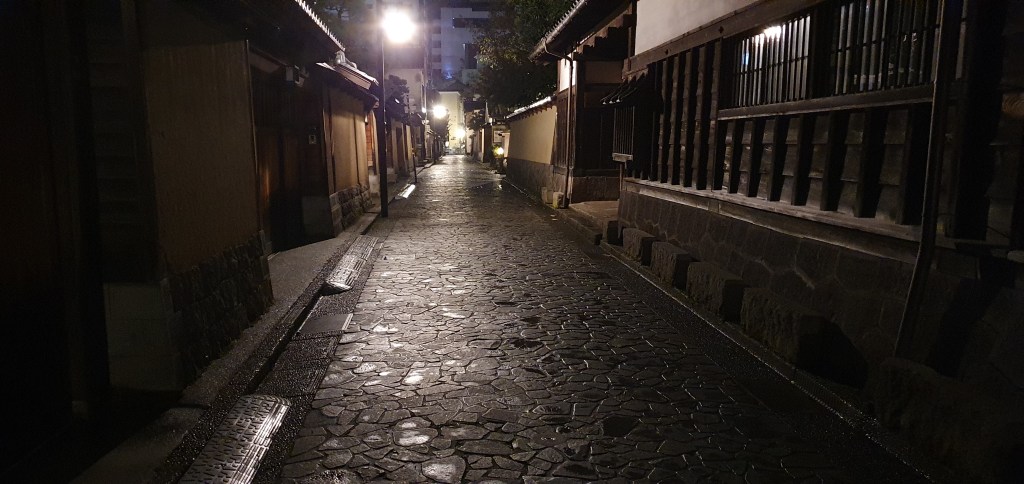
I liked rather than loved Kanazawa. It’s packed with fascinating places, including the characterful laneways of the geisha and samurai areas, but somehow it never really seduced me. The city that did was Tokyo.
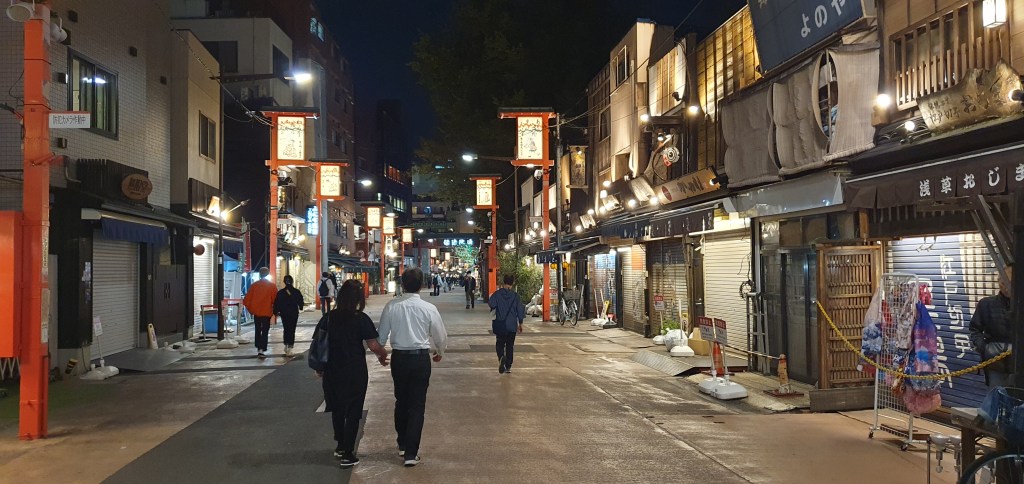
Tokyo felt large and anonymous the first time I visited, which is hardly surprising given it’s a city with a population of fourteen million. This time, we stayed just a few steps from Kappabashi Street, famous for its numerous shops selling everything for the kitchen. You can easily lose a day pondering everything from hand-forged knives and exquisite ceramics to industrial-sized pans and platters of fake food. And yet, being in the centre of the city, I was surprised how peaceful it was, waking in the morning to the sound of birdsong and even tolling bells from the various temples squeezed into the narrow backstreets.
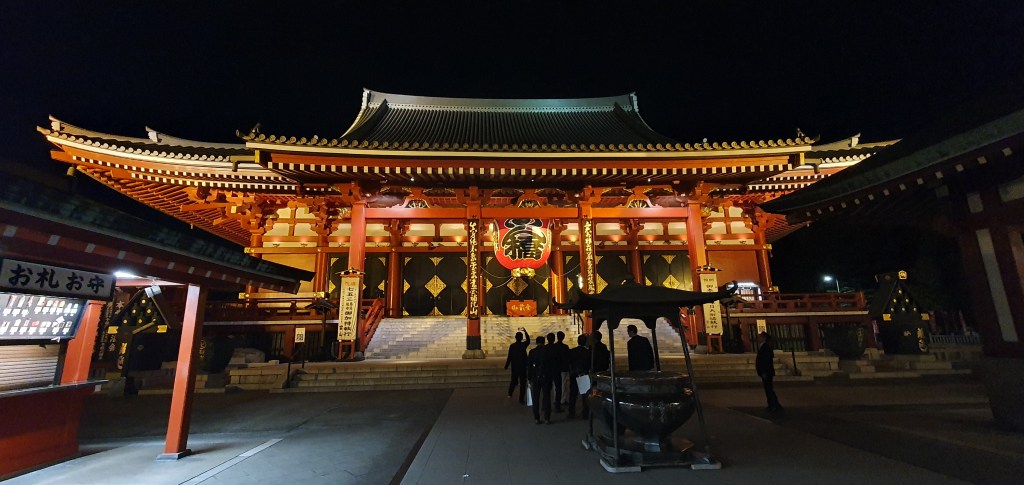
Senso-ji temple was nearby and is a huge draw but it’s worth going in the evening when it’s lit up and free from crowds. I kept thinking how I could happily have spent a week or more in Tokyo, there’s just so much to experience.
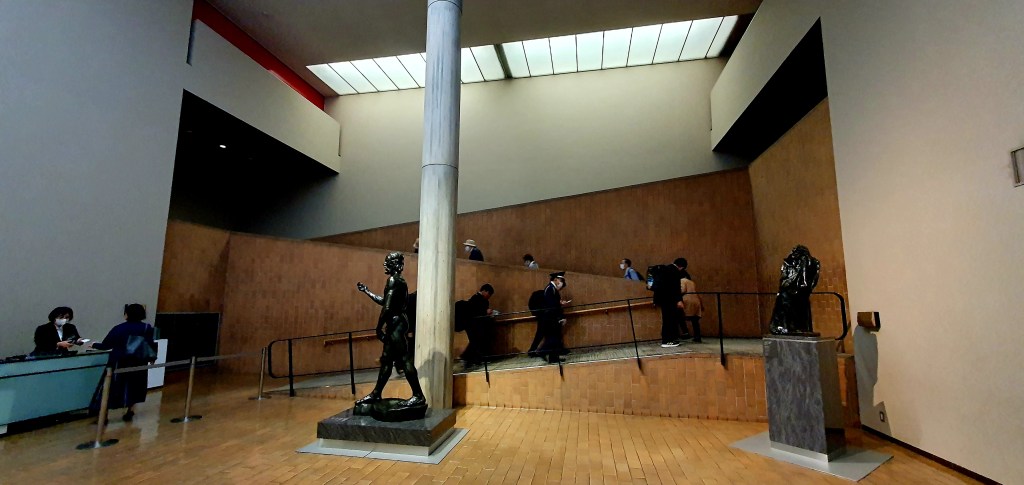
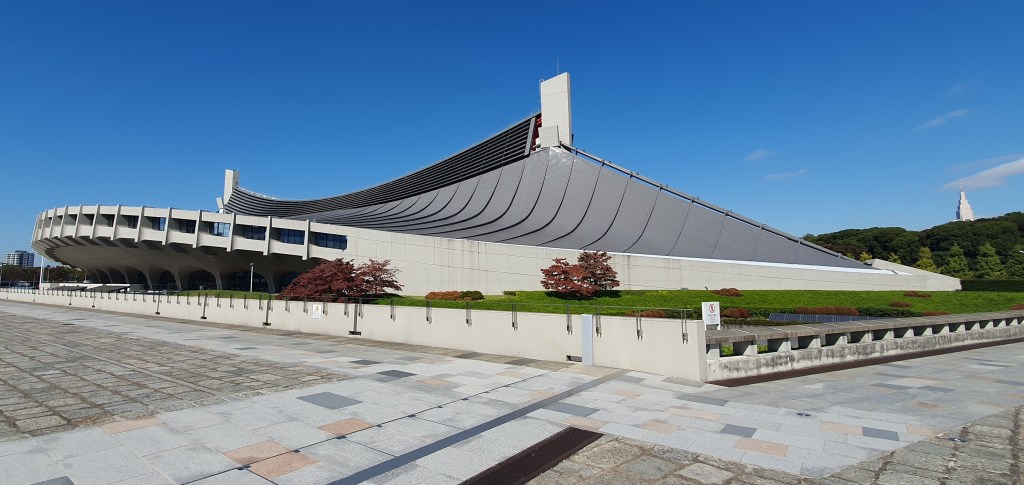
This time I sauntered through Le Corbusier’s National Gallery of Western Art (it was closed the last time I was there) and it was like visiting an old friend. Better, though, was strolling around the Yoyogi sports halls at the edge of Yoyogi Park. Kenzo Tange was inspired by Le Corbusier and his work from the 1960s is truly spectacular, so full of energy but practical, too. We sat for a while just soaking in their beauty. They really are two of the 20th century’s most beautiful buildings.
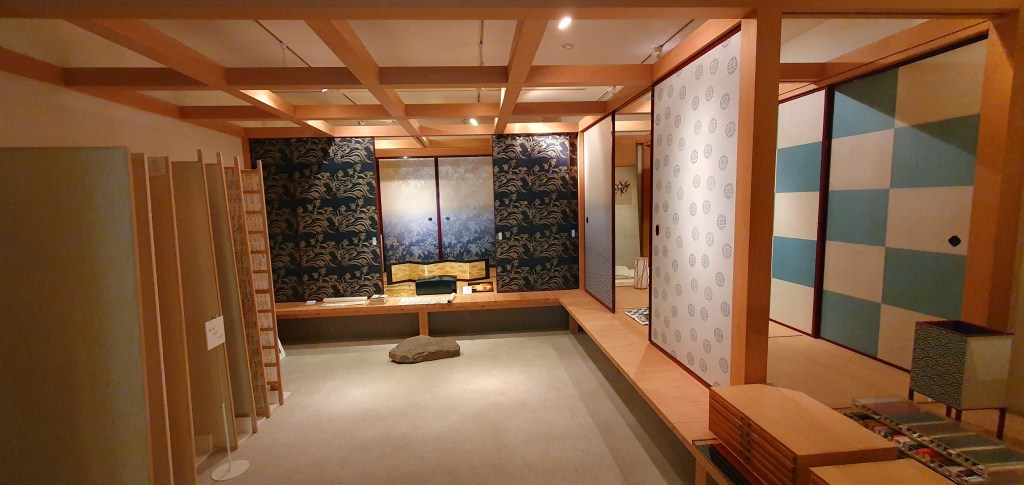
A cold was sapping my energy otherwise I would have gone to the Edo-Tokyo Museum’s outdoor exhibition on the outskirts of Tokyo, filled with heritage buildings including old shops and a traditional bath house reconstructed in a park. But simply walking the streets of Tokyo, enjoying the open space of the lush Imperial Gardens or the squeezy byways of Asakusa, gave me plenty to look at. When Anthony went off to visit a famous rose garden, I ambled back to the hotel and happened across a paper company’s showroom, where the owner proudly showed me the beautiful prints and papers the company has been making since the 17th century. They’re used in everything from swanky gift packaging to shimmering screens and lampshades. It reminded me how you often stumble across the best things when you allow yourself time to just dawdle.
I’ve never stayed in Japan for longer than a fortnight at a time but always I’ve left feeling full. There’s plenty to digest and so many moments of utter serenity, even in the dense, busy cities. It’s there in the little gestures and the warm smiles, and in architecture and gardens of all eras that highlight the Japanese appreciation for beauty. So when I was approached by a shiny white security robot at Narita airport, which gave me the once-over with its swivelling eye, I could only smile. Japan, bonkers and brilliant. I can’t wait to go back.

 Colin Bisset
Leave a Reply