I spent a morning recently looking for places to stay in France for our forthcoming trip. Nothing fancy, just mid-range kinds of hotels but preferably with a bit of character. Looking online at French property, I am always struck by two things. The first is how bad the websites are, some just telling you to contact them by phone (get with the times, mes enfants). The second is how often the interior of a charming old building is completely at odds with its exterior. An elegant-looking country hotel, for instance, might have a dining room full of smoked glass and mirrors, and bedrooms with jazzy lacquered furniture and ensuites tiled in bright red. There’s often an 80s vibe even when it was obviously done more recently but I put that down to the curious affection the French have for Perspex and chrome. It feels jarring, like wearing flipflops with a suit.
It’s not that I think that everything should be done in a specific way but I do think there are good ways of mixing old and new. In 1972, when Georges Pompidou took over from Charles de Gaulle, he had designer Pierre Paulin update a few rooms in the Elysée palace in the latest funky fashion, and it was great. The interiors I keep coming across on my search just look as though they’re trying to steer your eyes away from the old stuff and make you believe you’re staying in a generic modern hotel.
And yet I sort of get it.
When you are surrounded by so many old buildings, you start to crave something modern. You want to get with the times. Just as Le Corbusier did, growing tired of pitched roofs and small windows and giving the world roof terraces and walls of glass instead. But it’s a tricky thing to update an old building without it looking a bit off. I’ve noticed that in Britain, too. Last year, for instance, we stayed in a hotel which had been wallpapered to death, and every other surface concealed in some way. What had once been a fine Victorian house was now an interior design funfair, presumably done in the hope you wouldn’t notice the ugly fire doors, lowered ceilings and meandering corridors. Another quaint-looking (on the outside, at least) hotel was decorated to within an inch of its life with all kinds of faux tat intended to imbue the place with character, when the building itself already had it in spades. I felt quite breathless every time I entered our bedroom filled with its shabby chic shit.
Beating old buildings into submission is very much a European thing but something like it happened to my own house, here in Australia. The original owners of our old farmhouse smothered the hardwood floors in deep-pile Wilton, covered the timber walls with sheeting that was then wallpapered, and draped the tall windows with swagged curtains. They obviously wanted the place to look like a townhouse with all mod cons (including a red tiled bathroom). It was a joy to tear it all out and give the place some dignity again.
That’s becoming a rare thing today because there’s a much simpler way of making your house look modern: demolish it. I was in Sydney recently and drove past our old house in the suburbs. It was an ordinary place, built in 1950 when post-war materials were at a premium, but it was solidly done, with brick walls and timber floors, a touch of Art Deco in the bay windows. We lived there for nearly thirty years and had added a second floor with timber floors and another bathroom, every room a decent size. When we sold it we feared developers would be attracted to the large block but the agent was hopeful that a family would buy it. The developer won.
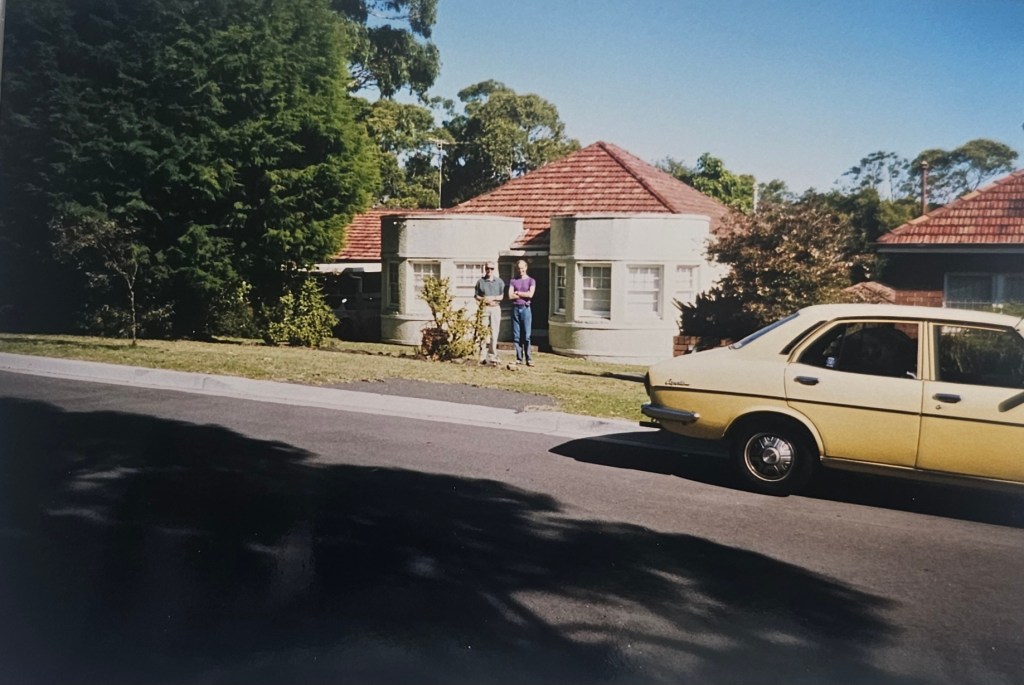
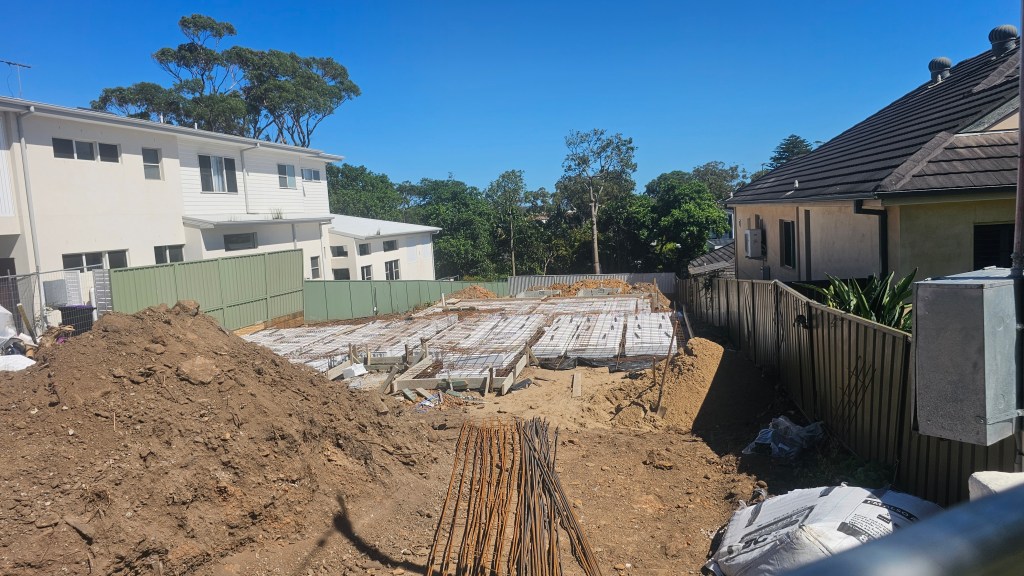
The old house has now gone, as has every living thing on the block, and new foundations laid for a pair of large, attached houses (known as a duplex in Australia). This is commonly done across Australia. The new homes will be bright and white and have luxuries like walk-in wardrobes and a plunge pool in the backyard, even if there’s no room for anything else, like a tree. The quality will meet regulations, if nothing more, but no matter, buyers will be distracted by the feature fireplace and the butler’s pantry.
When we first moved to that street in the 1990s, there were still a couple of wonky timber cottages, remnants of the settlement of the area in the early 1900s. None remain. One was replaced by a large family house that was itself demolished just ten years later to make way for a sparkling white duplex. In time, I imagine all the houses in the street will be replaced by blocks of flats. It’s the way of the world and has been ever since the Industrial Revolution turned green fields into suburbs. Greater populations need to be housed.
But the casualty is often character.
So when I wince at the curious way the French or the English have updated their old buildings, I am also thankful that the old buildings have survived. Fittings and finishes can be changed and restorations are always possible. At a talk I went to last year, the Japanese architect Kengo Kuma floated the idea that sometime soon architects won’t design wholly new buildings but will only refurbish older ones. There’s enough architecture already in the world, he said. He was talking about big projects, like office buildings. I can’t see that happening in Australia if it maintains its slash-and-burn mindset.
History is the best teacher, as Le Corbusier liked to say. And old buildings, even if they’re mere decades old, still have something to say. Not everything has merit, of course, and the past is a sentimental place but everything adds to the story of today. Sometimes we just need to be shown how to love the wrinkles. In the meantime, can someone please find me a hotel in Normandy without a smoked glass table?
What building would you hate to see demolished?



 Colin Bisset
This made me smile. I’ve stayed in so many places in France as you describe — that 80s vibe with random bits of Mondrian and chrome. As for the English love of wallpaper – ugh! – I don’t get it either, very claustrophobic.
Very sad to see so much demolishing and rebuilding in Australia. I feel that way when I go back to Toronto and a forest of towers has grown up in what used to be a treed neighbourhood of midrise buildings. I’d be horrified to see them rip down the landmark Union Station or that grand old lady of a hotel, the Royal York (where my husband worked when we first met.)
Unfortunately I don’t know any hotels in Normandy but I can suggest a website (which perhaps you know): Tablet. It’s higher end boutique-type hotels but a good starting place if you want something better than the average.
LikeLike
There’s a definite fixation with red! The glossier the better. Thanks for the tip re Talent – I haven’t heard of that one so fingers crossed we can wade through the red and find salvation. 🙂 I hadn’t heard of the Royal York and looked it up. Wow, what a grand old pile it is, like a modern sphinx commanding the city. Definitely verboten to demolish.
LikeLiked by 1 person
By the way it’s Tablet Hotels if you want to do the google. 😎
LikeLike
Thanks – that was my lazy edit😁
LikeLiked by 1 person
Thanks for your story Colin. I agree with your comments re France and England. Our own street in Burraneer NSW is disappearing under monolithic concrete houses and swimming pools. There’s nowhere for nature to survive. It seems that we’re mostly obsessed with huge houses and have forgotten the positive side of living with nature.
Regards Ray
LikeLike
I daresay people complained when our streets began to fill with houses back then but at least there was room for trees and gardens. Without even some sort of nature corridors, like street plantings, the small birds all disappear. We’re certainly witnessing a huge change in the suburbs. Good luck with holding on to your piece of paradise, Ray.
LikeLike