Japan is good for your mental health. I’ve said that before, and having just returned from my fifth trip there, it still holds true. I feel good in Japan, less stressed, more relaxed. It’s a country that appears – to the visitor, at least – to work properly, with efficient transport, polite interactions with almost everyone you meet, and a general sense that the world functions better if everyone just follows the rules. Of course, that’s a red flag for many and, indeed, the imperative to conform must be stultifying for some. But how pleasant it is to be in a country where people take their rubbish home and vandalism is almost unknown, where you find umbrellas at a bus stop in case you get caught in the rain, where people queue for trains (no charging for the door that you get in so many other countries), and where there’s a general air of calm, even in loud city streets. Japan is good for my mental health, at any rate.

I was there this time to work, leading a tour for a couple of weeks with a focus on architecture and design. It was my first time as a guide so I was nervous but my fears were allayed the moment I met my group, eighteen warm and intelligent souls who were keen to see new things. At each step we were accompanied by a Japanese guide, too, so I didn’t have to sweat the small stuff.

We started in the city of Kobe and then made our way across the island of Shikoku before heading back to the mainland and ending in Hiroshima. We would visit an indigo dyeing factory, washi paper makers, furniture makers, and sculpture gardens. We would stroll among village buildings by Kengo Kuma and through galleries designed by Tadao Ando.
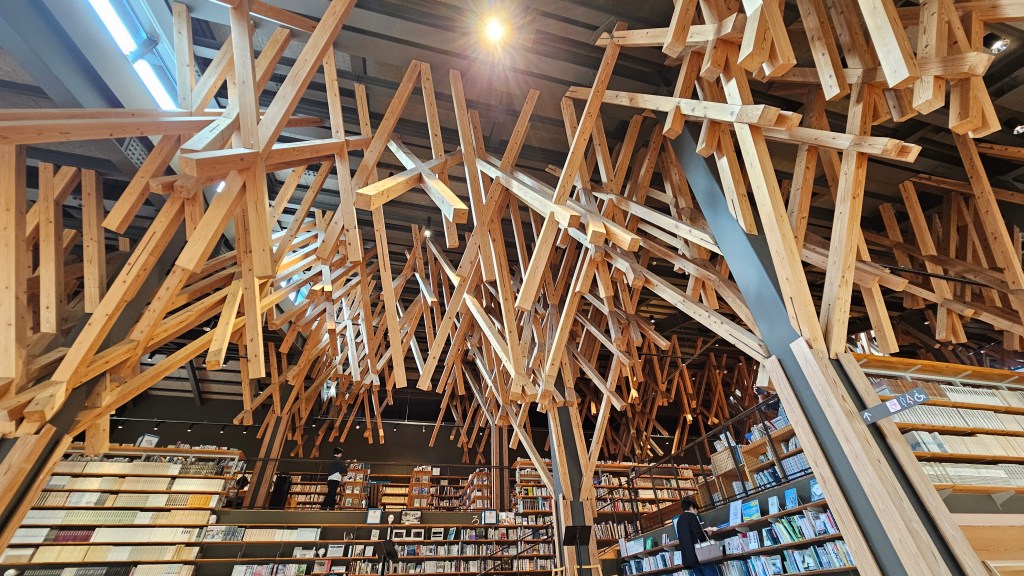
We’d inspect one of Frank Lloyd Wright’s rare survivors from the 1920s.

We would also visit two wonderful waste incinerators, and so much more.
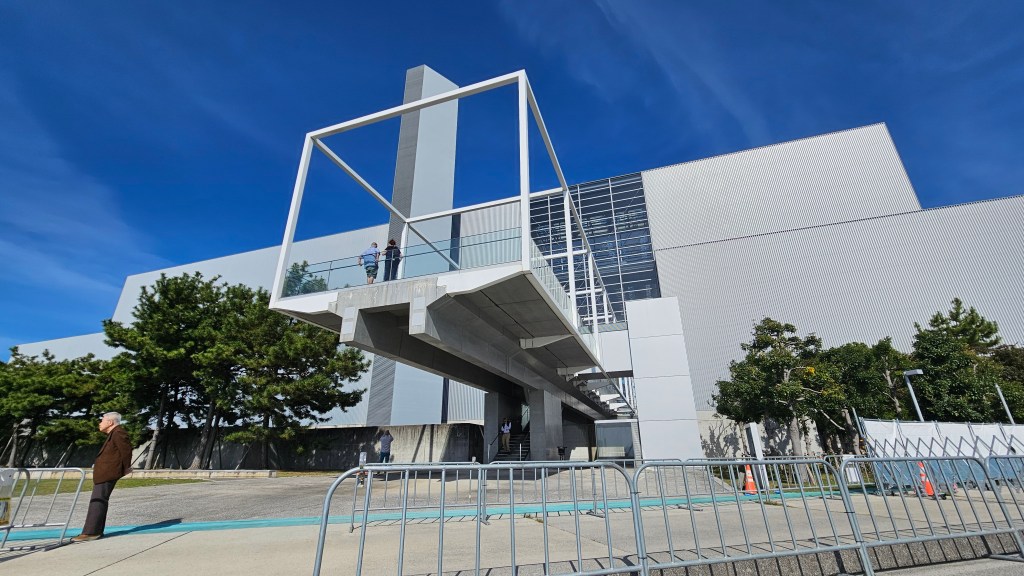

I was thrilled to visit one of Kenzo Tange’s early works at the Kagawa Prefectural Office in Takamatsu which manages to be both International Modern and totally Japanese at the same time.


It’s always fascinated me how this Japanese-ness pervades even Japan’s most cutting-edge architecture, and how designers incorporate age-old traditions while creating something new. I wanted my group to experience all of that.
Kobe was devastated by the terrible earthquake of 1995 and Hiroshima was flattened fifty years earlier by the atom bomb so the tour was bookended by terrible tragedy. Not that you’d know it. Any country that lives with the constant threat of natural disaster, from earthquake and tsunami to typhoon and landslip, has got to have a certain stoicism and resilience.

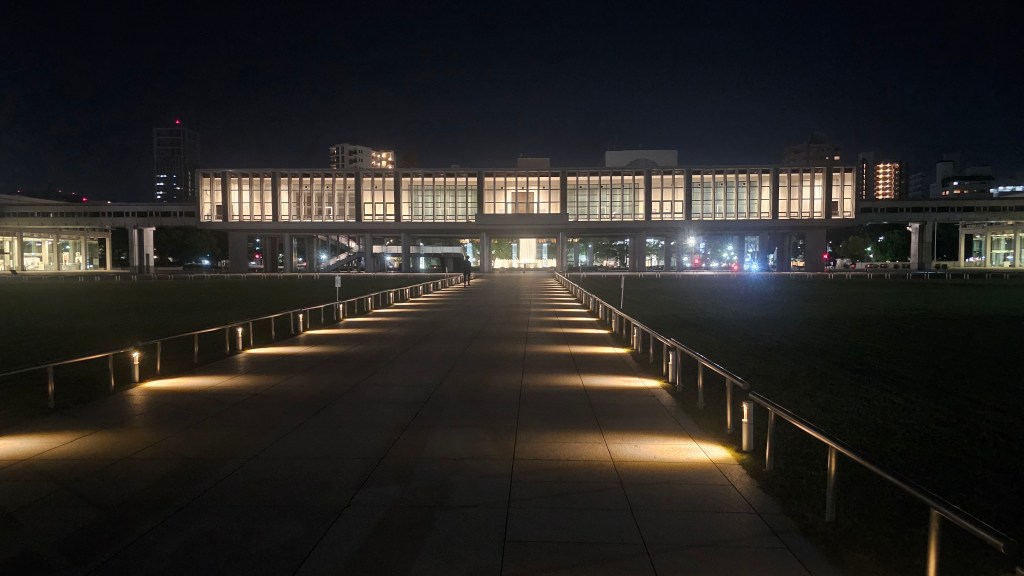
Hiroshima, for instance, despite its awful past, is an upbeat city set among beautiful hills and beside the tranquil Seto Inland Sea. Its Peace Park is a lovely space and the recent refurbishment of Kenzo Tange’s Peace Museum makes it clear what an elegant and respectful building it is, especially as it was designed just a few years after the devastation of the city. At night, especially, it is like a paper lantern in the park. A building in repose, as Australian architect Robin Boyd put it, but never asleep.
The issue in Japan at the moment is its incredible popularity. I knew at least three other people who were visiting Japan at the same time as us. It’s always like this. Partly because Japan is easy for Australians to get to and being in virtually the same time zone means there’s no jetlag to contend with. The rest of the world loves Japan, too, and the best-known places are often crowded. Kyoto is especially packed, and it’s become difficult for residents to move within their own city, given the buses are always filled with tourists heading to their next Instagram encounter. As a result, smaller cities have become more popular. In Hiroshima, for instance, the exhibition halls of the Peace Museum were dangerously packed, a problem that timed tickets would surely alleviate. When we headed into the mountains beyond Matsuyama, though, we were well away from the scrum, and our gentle ferry ride to Hiroshima was in a stylish vessel that we had almost to ourselves. In other words, Japan still offers plenty of quiet places to explore.
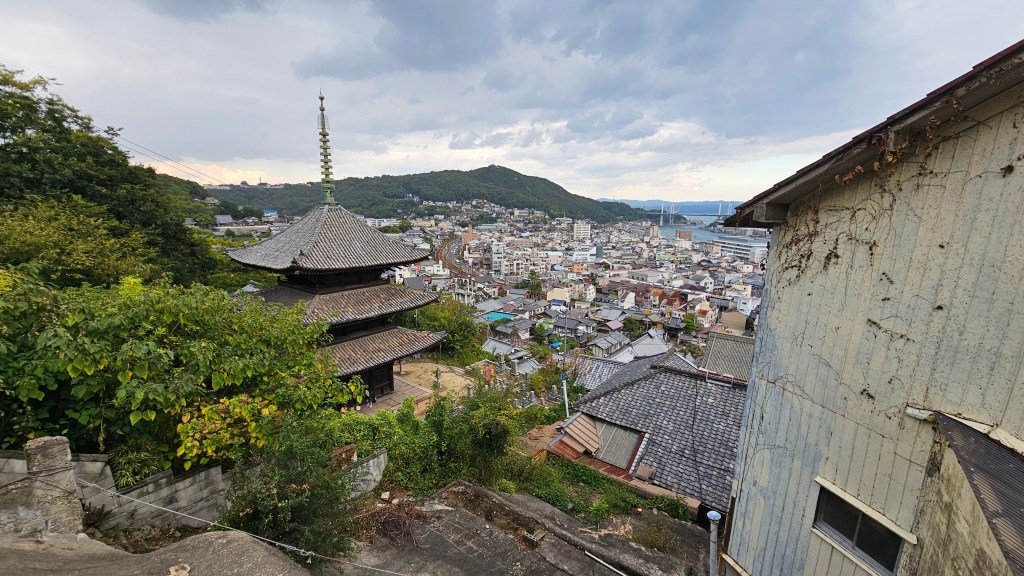
When the tour ended, Anthony and I headed north for autumn colour. Our first stop was the nearby port of Onomichi. We’d passed it in 2018 and I thought its hills and waterways looked fascinating. With numerous temples and wonky old houses, it’s like something from a Miyazaki film. We loved the riotous Shinto festival that roared through the town in the evening to drumbeats and chanting. Whereas when we arrived further north in Takayama, the gateway to the Japanese Alps, it felt like all we saw were Western faces. The draw is the beautiful national park at Kamikochi and the traditional villages of thatched buildings that dot the area.
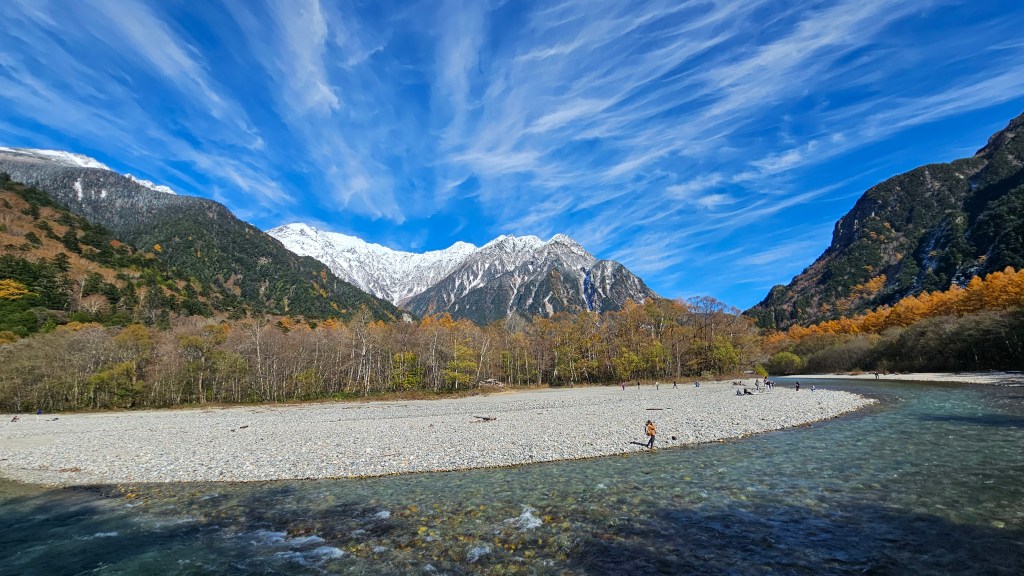
It’s obvious that Takayama is not yet fully prepared for the tourist onslaught, the local trains not able to cope with the crowds, the old streets full of tourists. I was part of the problem, of course, and I suspect the town will gear itself up in time. Smaller towns nearby retain their sleepy atmosphere, thankfully.

After a fortnight of big hotels, we enjoyed the intimacy of traditional ryokans. In that particular region, the key element is the irori, the traditional sunken hearth whose fire heats the home and cooks the food. We ate wonderful meals at a table with a small irori at its centre, used to grill skewers of fish and warm hearty broths.

The bedrooms even had an irori but, given the buildings are all timber and paper screens, I thought it wise not to light a fire. The ryokans have onsens, too, as the area is full of hot springs, and it’s bliss to loll in the hot mineral water at the end of the day, with the rushing sound of nearby waterfalls, the smell of cedar and cypress all about, and a view to distant mountains.
When we first visited Japan in 2014 we were astonished by so much, from bidet-toilets and slippers to the tiny restaurants that seat only ten. I’m less astonished now but still delighted by these quirks. I love the food halls in the department stores where beautiful cakes are packaged for you as though they’re jewels. I love the intricate bento boxes that turn lunch on a train into a gastronomic event.

It’s hard not to smile at the infantilising of so much, too, from school buses with rabbit faces to Hello Kitty trains, the idea of kawaii or cuteness apparent in advertising and young women dressed like schoolgirls. I adore the tiny kei cars and trucks that fill the roads and make such supreme sense. (Coming back to the car park at Brisbane airport to fetch our own SUV among a sea of huge utes felt absurd.) And always I am wowed by its architecture, both old or new.

The more I visit Japan, the more I discover and the more I want to see. And that can mean only one thing: I must return again for another fix. I think I’m hooked. Mental health is never straightforward, I guess.



 Colin Bisset
I loved following your Japan trip on IG and wish I had been able to join this architecture and design-focussed tour.
LikeLike
You would’ve enjoyed it. Thanks for following on IG!
LikeLike
You’re so right — Japan delivers on so many levels: beauty, taste, a sense of order and security, above all ‘dépaysement’ for us Europeans. I also enjoyed your posts of this trip on IG, and feel inspired to return soon. We are thinking of the southern island of Kyushu for the scenery and the abundant onsens (though it sounds like you got plenty of both in the north!)
LikeLike
Kyushu is definitely on my to-do list. The Alps are full of hot springs, too, and that was the decider on whether to go north or south – autumn colour + onsens = perfect Japanese experience. Japan does remind me in many ways of Switzerland – the slightly odd vibe, the beautiful landscapes, the muted but strong sense of nationality. Maybe that’s why I like to go to both every year, if I can …
LikeLiked by 1 person
I get that. Long may your travels to both unique countries continue!
LikeLiked by 1 person